
For baseball newcomers, the catcher position is challenging. Besides requiring quick reflexes and good physical fitness, the catcher’s hand movements and glove usage are crucial. Many beginners develop incorrect postures in the early stages of training, which not only affects catching efficiency but can also lead to injuries to fingers, wrists, and even forearms. Correctly understanding the use and techniques of the baseball glove is an important step for beginners to improve quickly.
I. Common Beginner Posture Mistakes
One of the most common mistakes beginners make when practicing catching is placing their glove too low or too high. If the baseball glove is too low, the ball easily slips through the palm, increasing the chance of missing the catch; if the glove is too high, it puts excessive pressure on the wrist, easily causing fatigue or even sprains. Many beginners also fail to open and close their gloves in time during fast movements, and this disjointed movement affects overall catching efficiency.
Another common problem is incorrect finger grip. Some beginners habitually straighten all their fingers, resulting in an unstable grip on the glove, concentrating the impact on the finger joints, and increasing the risk of injury. Some beginners also rely too much on wrist strength to control the opening and closing of the glove, neglecting the coordinated action of the wrist and forearm muscles. This method of applying force is not only inefficient but also prone to causing localized strain.

II. Baseball Glove Grip and Hand Posture
Proper baseball glove grip is fundamental to training. Beginners should ensure their fingers are naturally curved, their palm fits snugly against the glove lining, and they maintain a degree of flexibility. The wrist should be in a neutral position, avoiding excessive flexion or extension to reduce joint stress. When catching the ball, the glove should be slightly tilted, allowing the ball to naturally enter the palm rather than striking the back of the hand directly.
A baseball glove should be fluid and smooth. Slightly open the glove before catching the ball, then quickly close it as the ball approaches, using the padding in the palm to absorb the impact. The entire process should be completed through the coordinated action of the wrist and forearm, not solely relying on the fingers or wrist. Proper opening and closing technique effectively disperses impact force and reduces the likelihood of hand injury.
III. Continuity of Movement and Coordination of Movement
Catchers not only need to catch the ball while stationary but also while moving. Beginners often forget to maintain the connection between their glove and the ball while moving, leading to an imbalance in their posture. Training should focus on coordinating the baseball glove position with the body’s center of gravity, allowing the glove movement to naturally integrate into actions such as squatting and lateral shifts.
During the catch, the glove should adjust its angle with the body movement to maintain optimal contact between the ball and the palm. Disjointed movements or a lag in glove placement will lead to missed catches and increase strain on the hand muscles. Repeated practice, making glove movement an integral part of the body, is a crucial step for beginners to improve their catcher skills.
IV. Common Posture Correction Methods
To correct incorrect use of the baseball glove, start with the basic movements. Begin with slow-motion practice, focusing on the glove grip, range of motion, and wrist position, ensuring each movement is within safe limits. Slow practice helps beginners build proper muscle memory and avoids developing incorrect movement patterns during rapid training.
Secondly, use lightweight training balls for practice to reduce impact and allow the hand more time to feel the interaction between the glove and the ball. Incorporate mirrors or video feedback into training to help beginners observe the glove position and hand movements for accuracy. Visual feedback allows beginners to more intuitively understand posture problems and make timely adjustments.
Another method is to break down the complex catching motion into four steps: gripping the ball, moving, opening and closing the hand, and absorbing impact. Practice each step separately to ensure accuracy, then combine them for a complete training session. This decomposition method helps beginners develop a complete and fluid catching motion while reducing hand strain.
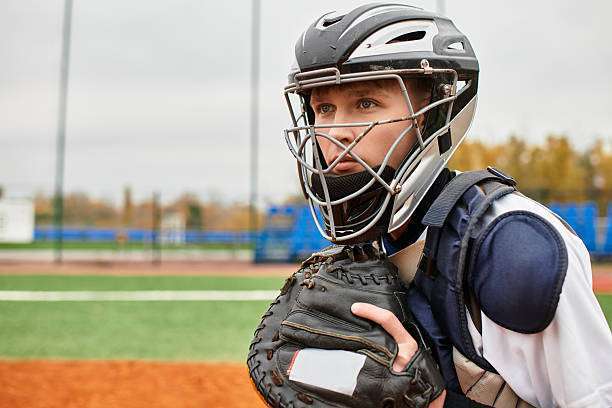
V. Psychological Factors and Glove Familiarity
Beginners often experience nervousness during training, especially when facing high-speed balls, which can lead to fear, stiff hands, and unnatural movements. Repeated practice with a baseball glove can increase hand comfort and help beginners gradually build confidence. Familiarizing oneself with the glove’s weight, grip, and elasticity is a crucial step in achieving natural movement.
By gradually increasing training intensity, from slow balls to standard ball speeds, gloves become a bridge between mindset and movement. Gloves not only protect the hands but also help beginners mentally accept the rhythm of the sport, improving reaction speed and accuracy.
VI. Precautions during training
During training, pay attention to the overall coordination of the baseball glove with your body, not just the hand movements. Maintaining a stable squatting posture and balanced core muscle engagement effectively supports hand movements and reduces stress on the wrists and fingers. Avoid prolonged, continuous, high-intensity training; take timely breaks and stretch your hand muscles to prevent fatigue injuries.
At the same time, choosing gloves that fit your hand shape and strength is also important. A baseball glove that is too large or too small will affect grip and accuracy, increasing the likelihood of incorrect form. Beginners should choose appropriate gloves based on hand length, palm width, and stage of practice to ensure correct feedback in every practice session.
VII. Conclusion
Baseball gloves are not only protective gear but also an important tool for beginners to train their skills. Proper use of the glove helps beginners develop good catching form, reduces the risk of injury, and gradually improves the fluidity of their movements and their reaction time. Through basic grip practice, slow-motion training, breaking down movements, and mental adaptation, beginners can effectively avoid common posture errors, perfectly integrate glove use with body movements, and lay a solid foundation for catcher skills.