Baseball Glove 6: The Psychology of Color: Choosing the Wrong Color May Disrupt the Pitcher’s Rhythm

The color of gloves is never just decoration; it’s an invisible force that influences the rhythm of the game.
Among the many pieces of equipment in baseball, the baseball glove is often considered the least important in terms of appearance. For many, a baseball glove is simply a tool for catching the ball, and color is merely a matter of personal style, not affecting performance.
However, long-term professional observation, psychological research, and experience in pitcher-catcher pairings all show that the color of the baseball glove is far more important than people imagine. Color not only affects the pitcher’s visual focus at the moment of throwing but can also affect the catcher’s clarity of the target point, subtly influencing the pitcher’s stability, rhythm, and even confidence during the pitching motion.
When pitchers are focused on throwing, their vision is limited to two key targets: the catcher’s baseball glove position and the catcher’s positioning. If the glove color is incompatible with the environment, pitcher’s habits, or the game’s atmosphere, it can make the target point too conspicuous or too inconspicuous, causing the pitcher to hesitate slightly at the moment of throwing. Catchers, in turn, use glove color to help pitchers find their position more easily, improving pitching accuracy.
In other words, baseball glove color not only affects the viewing experience but also influences how the pitcher’s brain transmits signals, representing a severely underestimated psychological factor in the game. This article will delve into the subtle yet crucial impact of six colors on communication between the catcher and pitcher, helping advanced players understand the importance of color from a professional perspective.
Black gloves: psychological safety derived from stability, composure, and professionalism.
Black is the most common choice among all baseball glove colors. Its understated, stable, and non-reflective properties allow pitchers to lock onto the target without distraction.
The advantage of a black baseball glove is that it maintains a clear outline in any lighting and against any stadium background without being overly eye-catching. For pitchers, the calmness of black symbolizes stability, making it easier for them to focus on the pitch trajectory in tense situations rather than worrying about being distracted.
For catchers, a black baseball glove reduces the risk of revealing their hand gestures when throwing pitches. Because the black back of the hand is inconspicuous, the pitcher can focus on the center target in the final stages without being distracted by details.
This provides a sense of visual calm to the catcher when the pitcher is inconsistent. Furthermore, a black baseball glove is often associated with professionalism, creating subtle pressure for opponents facing a well-equipped and composed catcher. While black may seem ordinary, it is the best symbol of mental stability.

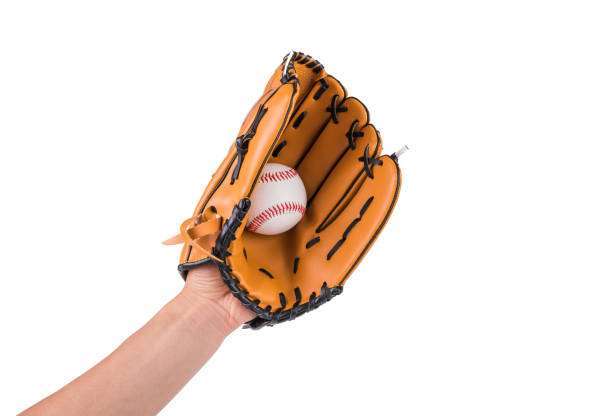
Brown and natural leather baseball glove: a continuation of tradition, nature, and pitcher focus.
Brown gloves hold deep symbolic significance in baseball history. They evoke images of simplicity, tradition, and durability and were the most common color used by old-school catchers. Brown baseball gloves offer a visually soft, non-contrasting effect, making it less likely to overstimulate the pitcher. This natural tone is ideal for pitchers who require extremely high concentrations and tend to pitch accurately with minimal visual stimulation.
The brown baseball glove also helps the catcher create a gentle visual path when guiding the pitcher’s rhythm. When the catcher sets the target, the brown covering makes the glove look more like an extension of the body than an obtrusive target. This natural feel can reduce the tension or pressure the pitcher might feel from an overly conspicuous target, especially when facing crucial at-bats, as the brown glove provides the pitcher with a psychological cue of stability and continuity.
However, brown gloves can also present a problem: if the stadium background is dark and the jersey colors clash, the catcher’s gloves may not be as visually clear as black gloves. This forces the pitcher to spend more time finding the target, resulting in a slight delay in the rhythm. Therefore, brown gloves are more suitable for pitching and catching pairs with long-standing experience working together.
White baseball glove: The precision and controversy brought by high contrast
White baseball gloves are extremely rare on the baseball field, not for aesthetic reasons, but for their controversial nature in actual gameplay. The white glove’s color closely resembles the pitcher’s white ball, potentially making it difficult for the batter to discern the pitch’s trajectory. Therefore, many professional leagues even prohibit catchers from using pure white gloves. However, in unregulated games, white gloves can have a unique psychological effect.
For pitchers, the high contrast of the white baseball glove makes the target exceptionally clear. The pitcher’s eyes can immediately lock onto the white area when searching for the target, reducing hesitation and improving the fluidity of the mechanical motion. However, this color can also cause pitchers to become overly tense under such a bright focus, as the obvious target can lead to “forced precision pitching,” resulting in distorted motion or an incorrect release point.
Catchers who choose white gloves must have a very good understanding of the pitcher’s personality. If the pitcher is easily influenced by visual stimuli, white gloves may disrupt their rhythm. As for batters, white gloves are likely to cause complaints, so they are not suitable for use in official games.

Red baseball glove: a powerful stimulus of passion, aggression, and the pitcher’s mental rhythm.
Red is the most aggressive of all colors, symbolizing passion, speed, and a strong presence. A red baseball glove is often seen as a symbol of confidence and creates a strong visual focal point during a game. For pitchers, a red glove makes them highly recognizable, allowing for a more decisive pitching rhythm. It is particularly effective with fastballs, as pitchers can quickly find their release direction.
However, red can also overstimulate pitchers. When pitchers are tense or their concentration is low, a red glove might make them feel rushed, causing a disruption in their pitching rhythm. Control pitchers, in particular, are more prone to becoming impatient or overexerting themselves under the visual impact of red.
If a catcher decides to use a red baseball glove, they must ensure that the pitcher’s personality is suited to the color. Red suits explosive, proactive pitchers but may put psychological pressure on mild-mannered pitchers. Therefore, red can be a powerful tool to enhance performance or a hidden trap to disrupt rhythm.
Blue baseball glove: Enhancement of calm, rationality, and stability mechanisms.
In psychology, blue gloves are considered a cool color, associated with calmness, rationality, and precision. For pitchers, blue gloves can help them maintain a more stable mindset during the pitching motion, reducing anxiety and tension. This color is particularly suitable for control pitchers who rely on a steady rhythm and smooth movements, as blue gloves provide an excellent visual environment.
Furthermore, blue gloves typically don’t stand out excessively against the field background, yet still maintain a certain level of visual recognition. When the catcher is preparing the pitch, the presence of the blue glove is moderate, making it easy for the pitcher to find the target without creating a sense of pressure. Blue also symbolizes professionalism and composure, fostering a stronger psychological connection between the pitcher and catcher.
However, blue can become difficult to see in low light or when the jersey is too dark, so catchers must ensure that their colors match the team’s color scheme to maintain the best visual effect.
Special colors and mixed colors
Modern baseball gloves are beginning to feature different color blocking, special bright colors, or contrasting colors. The primary function of these gloves isn’t just style but also psychological warfare. Brightly colored lines or contrasting panels make the glove’s positioning clearer, making it easier for pitchers to find accurate targets when throwing at high speeds. However, overly bright colors can also attract the attention of batters, increasing the risk of revealing pitching strategies.
For advanced catchers, mixed-color gloves are a choice that requires careful evaluation. If a pitcher can improve their reaction to visual stimuli, bright colors can enhance their rhythm; conversely, if a pitcher is overly sensitive, mixed-color gloves can become the final straw that breaks their performance. Therefore, the use of special-colored gloves must be jointly confirmed by both the pitcher and the catcher to ensure that the psychological effect of the color is positive.
Conclusion
A baseball glove is never just a matter of appearance; it’s a crucial psychological element that influences a pitcher’s rhythm, focus, confidence, and performance in actual gameplay. Advanced catchers must understand the psychological differences associated with color and use this understanding to communicate with the pitcher, finding the most suitable color combination for both. While the power of color is intangible, its ability to influence the game is profound, and catchers who truly understand how to utilize color can often create subtle, decisive advantages on the field.