Baseball Glove’s 4 Essential Carrying Options: Fatal Details Easily Overlooked During Long-Distance Training

For baseball catchers, the baseball glove is not just ordinary equipment, but a core tool deeply intertwined with their hands, judgment, and the rhythm of the game. Many catchers, when purchasing a baseball glove , repeatedly compare leather grade, protective structure, and closure feel, but rarely seriously consider whether the “carrying method” of this glove is safe during long training sessions and frequent games.
In fact, relevant research and practical observation have found that the performance degradation of a large number of baseball glove during use is not actually due to the intensity of the game, as commonly believed. While baseball gloves do experience some impact and friction during intense matches, this is not the primary cause of their performance decline.
Conversely, performance degradation occurs more frequently in a range of factors outside the field, such as transportation, where baseball gloves may be affected by bumps and pressure; improper storage may cause deformation; and prolonged exposure to different environments, such as humid, hot, or cold conditions, can damage the material and structure of the baseball glove .
While the seemingly insignificant carrying plan appears to be merely a minor aspect of logistical support, this seemingly trivial detail often plays a crucial role in critical moments, directly determining whether a baseball glove can remain reliable during crucial stages of the game. A scientifically sound carrying plan can effectively reduce the adverse effects of transportation, storage, and environmental exposure on glove performance, thereby ensuring that the glove performs as expected when needed.
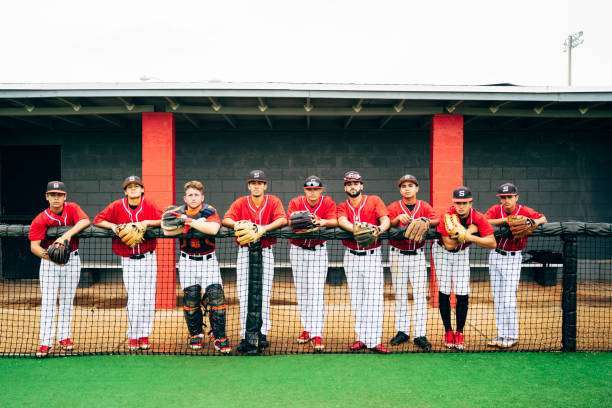
The first carrying logic: reserving “independent space” for the baseball glove .
The most common mistake during long training sessions or away games is packing the baseball glove in the same cargo hold as other equipment. Protective gear, shoes, water bottles, and clothing are constantly squeezed and rubbed during transport, easily deforming the catch area and palm area of the baseball glove . This is especially problematic during air baggage handling or long bus journeys, where the external forces are not temporary but continue for hours or even longer.
A reasonable carrying plan should first ensure that the baseball glove has a relatively independent space. This independence does not necessarily require an expensive special case, but rather avoids structural compression. The most vulnerable part of the baseball glove is not the outer leather, but the internal, molded catching area. If subjected to pressure under unnatural conditions for a long period of time, the glove will gradually lose its original closing trajectory, and the stability when catching the ball will significantly decrease.
Many experienced catchers will create a buffer inside their glove bag, allowing it to be placed in a position close to its intended use. The core of this practice is not to protect the appearance, but to protect the internal structure of the baseball glove that has been “tamed” by the body’s memory.
The second carrying logic: controlling humidity is more important than collision protection.
During long-distance training, humidity management is often overlooked compared to impact protection. Baseball gloves absorb a lot of sweat and moisture from the air during games. If they are sealed and stored immediately after training and then transported for a long time, a high-humidity environment can easily form inside. This environment will accelerate the aging of the leather and may even cause the internal filling materials to lose their elasticity.
Many catchers have had similar experiences: gloves may appear to be in good condition, but they become noticeably stiff or stuffy when used. This is often not a matter of age, but rather a result of uncontrolled humidity during transport. This problem is amplified, especially when training or competing across different climate zones. Moisture formed in humid environments repeatedly condenses and evaporates with temperature changes, causing irreversible damage to the leather fibers.
A well-designed carrying solution will allow gloves sufficient “breathing time” before packing and avoid complete sealing during transport. Even for short trips, gloves should not be kept in a damp or stuffy state for extended periods. For catchers, humidity management is not just a detail of maintenance, but a key condition for extending glove performance.
The third carrying logic: Maintaining the “usage memory” of the baseball glove .
a baseball glove and other gloves is that it relies heavily on the structural memory formed through personal usage habits. The angle of the catch, the closing path, and the palm concavity are not factory parameters, but are gradually formed through long-term training. Once it is incorrectly folded or subjected to reverse pressure during transport, this memory will be disrupted.
During the long and challenging cycle of training and frequent matches, catchers often overlook this crucial point. In this hectic pace, to carry more items in limited space, they often choose to fold their gloves haphazardly to save space. In the short term, this casual folding of the baseball glove may not seem to have any obvious negative effects. However, when they are in high-intensity catching situations, some subtle problems gradually emerge.
When catching a ball under high pressure, the baseball glove, having been carelessly folded beforehand, will exhibit some subtle deviations. These deviations may manifest as the glove’s shape becoming less precise, or its elasticity altering. When the catcher catches the ball, they will clearly feel a sense of instability.
This sense of instability is often mistakenly attributed by catchers and coaches to a decline in the catcher’s performance. However, the root cause of this instability lies in the continuous interference caused to the glove’s structure by improper carrying methods.
So, what kind of carrying method is reasonable? A reasonable carrying method should keep the gloves in a nearly naturally closed state during transport. This is not only about maintaining a relatively aesthetically pleasing shape for the gloves, but more importantly, about maintaining the catcher’s muscle memory and the coordination between the gloves and their equipment. For a catcher, the glove is definitely not a simple, passive tool.
Through long-term training and competition, gloves have become deeply integrated into their movement system, becoming an important extension of their body movements. Only by ensuring the gloves are in proper condition during transport can catchers maintain optimal condition and accuracy when catching the ball.
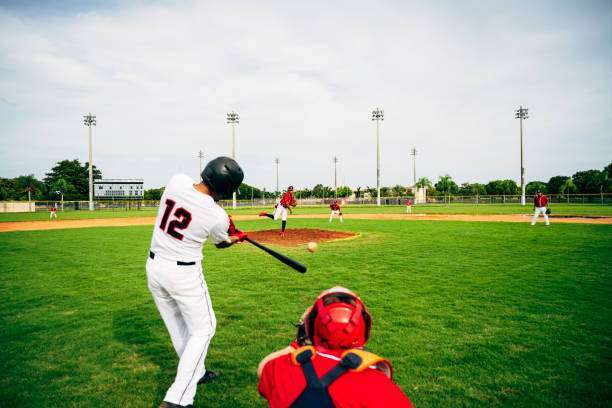
The fourth logic for travel: adapting to environmental changes during long journeys.
Long-distance training often involves rapid changes in environment. From dry to humid, from low to high temperatures, these changes have a far more severe impact on baseball glove than imagined. Leather, as a natural material, is extremely sensitive to temperature and humidity. Frequent environmental changes cause the leather fibers to repeatedly shrink and expand, thus affecting its overall elasticity.
Many catchers find their gloves feel off in the first few training sessions after long trips. This is not accidental; it’s the effect of environmental changes that have already taken hold during the carrying phase. If the gloves aren’t given time to adapt during this phase and are immediately thrown into high-intensity training, the wear and tear will be amplified.
A well-developed carrying plan takes environmental changes into account. Allowing the baseball glove a buffer period after arriving at its destination, gradually adapting to the new temperature and humidity conditions, is a crucial step in extending its lifespan. Although this process is invisible, it directly affects the catcher’s consistent performance during the game.
The most fatal mistakes in long-distance training
In actual training, the most fatal mistake is not a single error, but the accumulation of multiple oversights. Squeezing, dampness, structural deformation, and sudden environmental changes often coexist. Catchers are more likely to overlook these details when fatigued, until the glove develops irreversible problems in a crucial game.
A more insidious risk lies at the psychological level. When a catcher’s confidence in their glove diminishes, their catching motion becomes hesitant, and their judgment is affected. Carrying errors ultimately manifest in the game as technical mistakes, but are rarely traced back to equipment management.
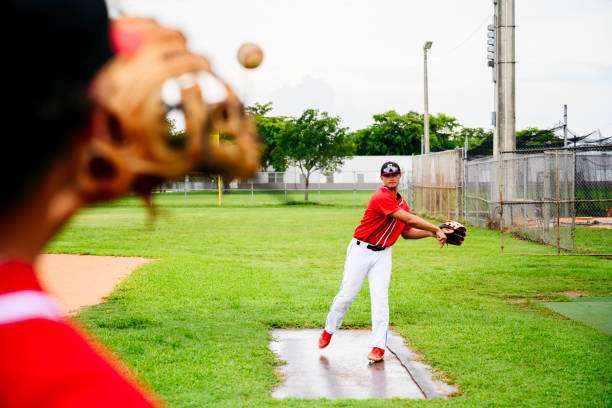
Upgraded Gear Awareness Behind the Carry-on Solution
As the intensity of baseball training continues to increase, the catcher’s position within the entire baseball system becomes increasingly reliant on equipment stability. Catchers bear a crucial responsibility in games and practice, needing to accurately catch pitches and make quick judgments and actions, which demands a high degree of equipment stability. Therefore, carrying plans go beyond simple storage techniques; they represent a concrete manifestation of equipment management awareness. A good carrying plan requires the catcher to comprehensively consider the characteristics of the equipment, the usage scenario, and various potential situations to ensure the equipment remains in good condition throughout the entire process.
Truly mature catchers approach equipment carrying with a more professional and rigorous attitude, viewing it as an integral part of training, not a dispensable supplementary activity. They understand that every step, from equipment selection and carrying to its use, is closely related to training effectiveness and match performance. During training, catchers frequently move and operate their equipment; only by integrating equipment carrying into daily practice can they better master its performance and improve their overall abilities.
This shift in awareness is profoundly significant. It signifies that catchers are beginning to understand that glove performance isn’t a fixed value, but rather something continuously shaped through every minute detail of use and carrying. Gloves are affected by various factors during use, such as hand movements, the amount of force applied, and the objects they come into contact with. During transport, their performance can also change due to how they are placed and the environment in which they are carried.
Long-distance training isn’t inherently daunting; catchers have already developed the physical and mental resilience to handle various challenges through extensive training. What’s truly frightening is that catchers often overlook the unseen wear and tear during long journeys. This wear and tear may not be immediately apparent, but it gradually affects glove performance over time, ultimately impacting the catcher’s performance in the game. Therefore, catchers must pay close attention to every detail during transport and carefully manage their equipment to perform at their best on the field.
Conclusion: Off the field, preparation determines the outcome of the match.
the baseball glove carrying solution is not teaching people how to pack, but reminding catchers that real game preparation begins the moment they leave the field. A properly carried glove provides catchers with stable feedback in crucial moments, while a glove neglected during transport may expose problems at the moment when reliability is most needed.
their baseball glove during long practice sessions baseball glove , they are also protecting their judgment, confidence, and game rhythm. Those easily overlooked details of equipment handling are often the fatal factors determining long-term performance. Truly professional catchers never only take their equipment seriously on the field.
FAQ
- How long do catcher gloves typically last? The
lifespan of a catcher glove depends on the quality of the materials, training frequency, and maintenance methods. High-end gloves can typically last 2 to 5 years under normal training and competition conditions; however, gloves used frequently and intensively or improperly may experience issues such as pocket collapse, leather hardening, or loose stitching within about a year. Regular maintenance, proper training, and using spare gloves can significantly extend their lifespan.
- Can catcher gloves be used in other sports?
While catcher gloves are primarily designed for high-speed balls and close-range control in baseball, they can also be useful in softball, handball, and certain practice sports. Softball catcher gloves are similar to baseball catcher gloves in terms of pocket design, but are usually slightly larger to accommodate the size of the ball; handball or practice gloves can draw inspiration from cushioning layers and wrist support designs. However, it’s important to note that different sports have different requirements for glove durability and flexibility, and directly replacing gloves may affect performance or comfort.
- Why does a catcher’s glove affect throw speed?
A catcher’s glove not only affects the receiving of the ball but also directly impacts the speed of the ball’s release. The depth of the glove pockets, the tightness of the closure, and the flexibility of the leather all alter the time the ball spends inside the glove. Pockets that are too deep or leather that is too soft will increase the ball’s dwell time, resulting in a decrease in throw speed. A well-designed glove, on the other hand, allows the ball to be locked in and released smoothly in the shortest possible time, thus improving throwing efficiency, which is especially crucial in preventing stolen bases or making quick returns.