Baseball Glove’s 6-Layer Hidden Engineering: The Cruel Science of Creating the Perfect Catch

In baseball, if the pitcher’s arm is the source of speed and power, then the catcher’s glove is the ultimate bearer of that power. A fastball traveling at over 150 kilometers per hour is thrown towards home plate without any cushioning, and it must ultimately be firmly “swallowed” into the baseball glove , without bouncing off course, without deviating, and without causing the catcher to hesitate due to pain. This seemingly simple moment is actually the result of the combined efforts of materials science, ergonomics, mechanical structure, and sports psychology.
Many people think of the baseball glove as just a “thicker glove,” but a deeper understanding reveals it to be a highly engineered protective device. To create a seemingly effortless, perfect catch, the baseball glove conceals at least six layers of complex engineering, each layer relentlessly battling impact, time, and the limits of the human body. This article will dissect the hidden engineering of the baseball glove from the perspectives of structure, materials, biomechanical distribution, and human adaptation , revealing the unknown scientific truth behind the perfect catch.
The first layer of engineering: The outer leather is not actually “leather,” but rather the first mechanical screening device.
A baseball glove is often mistakenly thought to be purely for durability and aesthetics. However, this layer actually serves as the first line of impact screening. Compared to field gloves, the leather used in baseball gloves is designed with a high-density fiber structure during the tanning process; its purpose is not softness, but rather controlled deformation.
When a baseball strikes the glove’s surface at high speed, the outer leather layer doesn’t collapse immediately; instead, it first undergoes a slight stretch. This stretching dissipates some kinetic energy and elongates the impact force for a very short time, transforming the instantaneous impact into sustained but controllable pressure. This time difference is crucial because the human body’s tolerance for “instantaneous impact” is far lower than its tolerance for “delayed pressure.”
This is why high-end baseball gloves often feel unusually stiff to beginners, even difficult to close. But it is precisely this “unfriendly” feel at first that ensures that at game-level speeds, the glove will not be too soft, causing the ball to bounce or the energy to hit the palm directly.
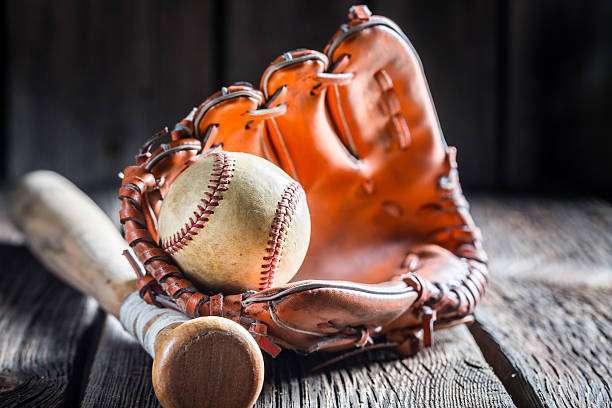
The second layer of engineering, the inner lining buffer layer, is not necessarily better the thicker it is, but rather the deformation rate should be precisely controlled.
Many people believe that the safety of a baseball glove comes from its “thickness,” but this is an extremely dangerous misconception. True protection comes from the control of deformation rate by the buffer layer, not from simply stacking materials.
of a baseball glove is typically made of multiple materials of varying densities. Its design goal is not to completely absorb impact, but rather to decompose the impact force into multiple directions before it passes into the next layer. High-end gloves use a combination of foam, fiber padding, and composite materials to weaken the force longitudinally and disperse it laterally.
If the cushioning layer is too soft, the force will be applied directly to the palm in a very short time, causing a dull ache. If the cushioning layer is too hard, the force cannot be absorbed and will instead be transmitted to the wrist and forearm through the overall structure, causing chronic damage. Therefore, a truly excellent baseball glove often has a “dull” feel to its cushioning layer; the ball feels like it is being held back rather than bounced off after entering the glove.
The third layer of engineering: The pocket structure determines whether the catch is “stable,” not just whether it’s “received.”
a baseball glove is not a simple recessed space but a carefully designed mechanical trap. The key to a perfect catch is not whether the ball enters the glove, but whether it is guided to the most stable position after entering.
a baseball glove is typically located slightly below the base of the thumb, a point proven through numerous experiments to be the optimal point for impact. When the ball enters this position, the impact is dispersed to both sides along the glove’s curved structure, rather than being concentrated in the center of the palm. This position also best allows the catcher to complete the closing motion at the moment of catch, creating a natural lock.
If the pockets are too shallow, the ball will bounce easily. If the pockets are too deep, the ball’s release speed will be slower, affecting the catcher’s passing. A good baseball glove must find a delicate balance between “catching” and “releasing” the ball, which is why there are significant differences in pocket depth between different brands and models.
Fourth layer of engineering: The stitch layout is a hidden mechanical guiding system.
the stitching on a baseball glove may appear to be merely structural connections, but it actually plays a crucial role in guiding the flow of force. The stitching on the glove is not randomly arranged, but rather designed according to the force path, allowing the impact force to be dispersed along a predetermined route after entering the internal structure.
In high-end baseball gloves , the stitching in critical load-bearing areas is often thickened and densified, while non-load-bearing areas are intentionally kept soft. This differentiated design avoids the concentration of force at a fixed point, thereby reducing material fatigue and localized collapse.
Furthermore, the material of the stitching directly affects the lifespan of the glove. Stiff stitching can tear leather, while overly soft stitching cannot withstand long-term impact. Excellent baseball glove manufacturers often invest heavily in research and development of the stitching itself, but these details are rarely noticed by consumers.
The fifth layer of engineering: Ergonomics determines whether catchers can “trust” the gloves.
baseball glove is not protection, but to build complete psychological trust in the catcher. When the catcher is no longer worried about pain or missing balls, their attention can truly be focused on pitch selection, rhythm, and runner control.
Therefore, the baseball glove’s internal structure closely conforms to the natural posture of the hand. The finger distribution angles, the curvature of the back of the hand, and the wrist support point are all designed around the “natural closing motion.” When catching the ball at high speed, the catcher hardly needs to consciously think about how to exert force; the glove automatically completes the safest and most efficient closing path.
The quality of such a design can often only be truly felt after catching fastballs dozens of times in a row. Cheap or poorly designed gloves can cause catchers to subconsciously make defensive movements, such as pulling back their hands too early or shifting their catching point, while good gloves will make catchers more and more stable and their movements more and more concise.
The sixth layer of engineering: Long-term durability is the ultimate test of materials and structures.
A perfect catch isn’t a one-time event, but a consistent output achieved through thousands of repetitions. Therefore, the final layer of engineering for a baseball glove is actually time itself. Whether the materials will collapse, the structure will deform, or the cushioning will fail will gradually become apparent over long-term use.
A truly excellent baseball glove , after being subjected to numerous high-speed ball impacts, will gradually “set” its shape rather than collapse. This settling means that the glove and the catcher have formed a unique fit, the pocket position is more defined, the closing path is smoother, and it is actually more effective than a new glove.
This is why professional catchers rarely change their gloves frequently, because a glove that has undergone engineering evolution is itself an extension of the catcher’s body.
Conclusion: A perfect catch is never just luck.
When we see a catcher smoothly catch a high-speed ball during a game, we often only admire the catcher’s skill, but overlook the engineering pressure that the glove bears behind the scenes. In fact, every perfect catch is the result of six layers of hidden engineering working together, a precise collaboration between materials science and the limits of human capabilities.
A baseball glove is not passive protective gear, but a sophisticated device specifically designed to “withstand violence.” Understanding this not only helps catchers better select and use the baseball glove , but also allows us to rediscover the often overlooked yet crucial details of the sport.
In the world of baseball, the true, brutal science is always hidden in the quietest moment of catching the ball.
FAQ
- How do catcher gloves help catchers develop a feel for the ball?
A feel for the ball is a core ability for catchers to judge the ball’s trajectory and control the rhythm. The glove provides direct feedback in this process. A suitable beginner glove should retain a moderate amount of impact, allowing the catcher to perceive the ball’s speed, spin, and position at the moment of catching, thereby training closing force and hand coordination. Overly thick or excessively cushioned gloves can dull tactile sensation, making it difficult for beginners to develop a stable feel for the ball and hindering their technical growth.
- What age group is suitable for catcher gloves
differently? Catcher gloves are designed based on hand size and skill level. Teenagers or beginners should choose lightweight gloves with shallow pockets and easy closure to establish a foundation in movement and feel. Adults and professional catchers can choose thicker, more protective, and durable gloves to handle high-speed balls and long training sessions. Matching age with gloves directly affects movement habits and injury risk.