Baseball glove 3 Revolutions in Protective Equipment: The Truth Behind a Century of Transformation from Thick Leather to Shock-Absorbing Layers

On the baseball field, the catcher is in the closest position to danger. A pitcher’s all-out fastball, traveling at over 150 kilometers per hour, hurtles towards home plate, and ultimately, it’s not the bat or protective gear that bears the brunt of it, but the baseball glove in the catcher’s hand . For most spectators, the crisp, clean sound of the ball being caught during a baseball game seems like a natural part of the game’s rhythm, like a perfectly timed beat in music, blending seamlessly into the overall flow of the game and not drawing much special attention.
However, for the catcher on the field, that loud “smack” has a completely different meaning. It is not just an ordinary sound, but a concentrated manifestation of many key elements such as power, speed, impact, and physical limits. When the baseball flies towards the catcher at extremely high speed, the moment it makes contact with the baseball glove , it contains enormous force. This force is transmitted to the catcher’s body through the impact glove, testing the limits that the catcher’s body can withstand.
Because of the unique circumstances and immense challenges faced when catching the ball, the evolution of the baseball glove has never been simply a history of equipment development. It’s more like a century-long history of human resilience against impact. Over this long period, from the early, rudimentary baseball glove to today’s professionally designed and technologically advanced glove , every improvement and development has been aimed at better helping catchers cope with the powerful impact of catching the ball, protecting their bodies from excessive injury, and witnessing humanity’s continuous exploration and progress in the face of impact.
The first revolution: The era of thick leather, relying on “toughness” for safety.
In early baseball, catchers didn’t have a proper baseball glove . From the late 19th to the early 20th century, catchers mostly used simple leather baseball gloves , sometimes even catching the ball barehanded. Baseball speed was far less than it is today, but hand fractures, joint injuries, and nerve inflammation from catching the ball repeatedly were common risks for catchers. The initial protective approach was very direct and extremely rudimentary: make the leather thicker.
early baseball gloves was to distribute impact force by increasing the thickness of the material. Cowhide and horsehide were repeatedly tanned and layered to create a hard and bulky structure. While this reduced the direct impact of the ball on the hand to some extent, it introduced new problems. The thick leather made the glove stiff, requiring catchers to exert more force to close it, significantly reducing their sensitivity and control when catching the ball. Many catchers had to compromise between protection and performance.
At this stage , the baseball glove was essentially “passive protection.” It didn’t absorb impact; it merely used weight and hardness to withstand force. The impact didn’t disappear; instead, it was delayed, diffused, and still transmitted to the hand. Catchers who used thick leather gloves for extended periods still commonly faced problems like numbness in their palms and degeneration of their finger joints. It could be said that the first protective revolution addressed “whether you can catch the ball,” rather than “whether you can catch it for a long time.”
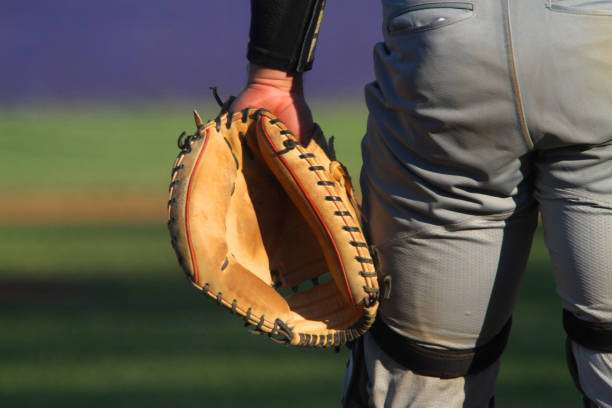
The second revolution: Structured design, directing power in the right direction.
As pitcher speed increased, simply using thicker leather was no longer sufficient to meet the impact demands of modern baseball. In the mid-to-late 20th century, the baseball glove underwent a true structural revolution. This time, designers began to consider a deeper question: should the entire impact force necessarily be borne by the hand?
The core of structured design lies in altering the path of power transmission. By incorporating zoned padding, finger grooves, and a palm buffer within the baseball glove , the impact is no longer concentrated at a single point but rather diffuses outwards along the glove’s internal structure. The glove begins to have clearly defined catching and cushioning areas, guiding the catcher to use the correct position for catching the ball.
During this period , baseball gloves began to emphasize a snug fit and protection. The glove was no longer just “a piece of leather in front of the hand,” but rather an extension of the hand. A more ergonomic finger groove angle allowed the fingers to be in a more natural bent position when catching the ball, thus reducing the impact on the joints. The thickened palm area and relatively flexible edge design allowed the catcher to withstand the impact of high-speed balls without completely losing control.
The significance of the second revolution lies in the fact that the baseball glove, for the first time, was no longer just a protective tool, but an engineered product. It began to actively manage force, rather than passively absorb it. This change significantly extended the catcher’s career and made high-intensity games possible.
The third revolution: the emergence of shock-absorbing layers, and the impact began to be “digested”.
What truly revolutionized the protection logic of baseball gloves was the introduction of shock-absorbing materials. In the 21st century, advancements in materials science have made designers realize that impact forces can not only be dispersed or transferred, but can also be absorbed, attenuated, and transformed.
The core principle of shock-absorbing layers is to continuously weaken shock waves as they propagate through a combination of multiple layers of materials with different densities. Modern baseball gloves often contain high-density foam, memory materials, and elastic fiber structures simultaneously. When a high-speed ball impacts the glove, the outermost leather layer disperses the initial impact, the middle shock-absorbing layer absorbs energy through deformation, and the inner layer converts the residual force into gentler pressure, which is then transferred to the palm.
This phase of the protective revolution allowed catchers to experience for the first time the feeling of “impact being absorbed.” Even when facing a series of fastballs, the vibration in their hands was significantly reduced. After long periods of training, hand fatigue was significantly reduced, and the risk of nerve damage decreased accordingly. Catchers no longer needed to endure the game to finish; instead, they relied on equipment to help their bodies protect themselves.
The advent of shock-absorbing layers has also changed catchers’ dependence on baseball gloves . Gloves are no longer just consumables, but have become highly personalized protective systems. Different catchers choose shock-absorbing structures of varying thicknesses and rebound characteristics based on the pitcher’s pitch speed, game frequency, and their own hand condition. This marks the beginning of a new era of sophisticated protection for baseball glove .

The Real Cost of a Century of Innovation: Protection is Not Without Cost
It’s worth noting that in the realm of baseball equipment, every upgrade to the protection of the baseball glove presents entirely new trade-offs. Take shock-absorbing layers, for example; they undeniably reduce the impact damage from the ball and opponent, a significant benefit of any upgrade. However, they also inevitably alter the feedback experienced when catching the ball.
Some catchers have explicitly stated that when the shock-absorbing layer’s effect is excessive, it significantly weakens the subtle “feel” they have for the ball. This “feel” is crucial for catchers, directly affecting their ability to quickly make passing motions and execute accurate tactical reactions. Because every second is critical in a game, a diminished “feel” for the ball can lead to inaccurate timing of passes or an inability to react appropriately to the situation on the court.
Therefore, the design of a modern baseball glove is not simply about pursuing maximum protection. Designers need to carefully find the perfect balance between ensuring the catcher’s hand safety and guaranteeing good catching feedback. This is an extremely challenging task because safety and feedback are like two ends of a scale; an excessive tilt in either direction can affect the catcher’s performance during the game.
This explains why top catchers are often extremely picky about gloves. Beyond the basic protective performance, they pay close attention to details such as the glove’s rebound speed, closure angle, and the clarity of the catch sound. For catchers, gloves do more than just protect the hands; they significantly impact the rhythm of the game and the catcher’s psychological judgment.
Let’s unleash our imaginations: what if there existed a special baseball glove , possessing unique performance and design that would give catchers complete peace of mind? In crucial moments of the game, such as decisive moments or tense situations involving powerful shots, catchers would have greater confidence and courage, making more decisive catches and passes. Because this glove provides reliable protection for the catcher’s hands, they wouldn’t have to worry about excessive injury from the impact of catching the ball. Without such concerns, catchers could concentrate all their attention and energy, focusing intently on every detail of the game and better handling complex situations.
Conversely, if a baseball glove is significantly inadequate in its protective features and fails to provide sufficient safety for the catcher, then the catcher will subconsciously worry about injuring their hand during the catch. This anxiety acts like an invisible shackle, gradually eroding the catcher’s focus. Their attention becomes distracted, preventing them from fully committing themselves to the game. In this state, the catcher may become hesitant in their movements, their reaction time will slow down, significantly impacting their performance in the game. This could lead to missed catches or misplaced passes, ultimately negatively affecting the outcome of the game.
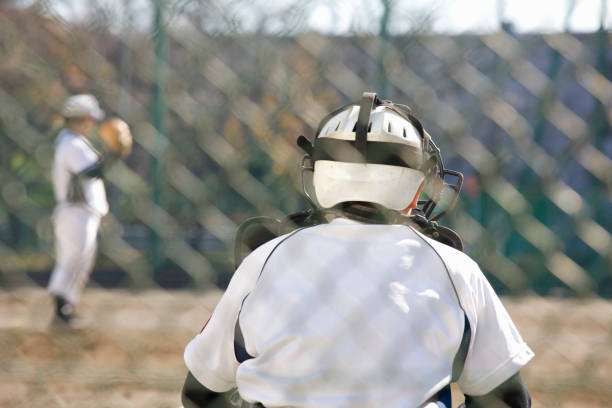
From thick leather to shock-absorbing layers, it’s not just the equipment that’s changed.
Looking back at the three revolutions in baseball glove protection, a clear trend emerges: protection evolved from “bearing the impact head-on” to “guiding force,” and then to “absorbing energy.” This process reflects the overall trajectory of sports equipment development from rudimentary manufacturing to scientific engineering.
More importantly, this century-long revolution has changed the meaning of the catcher position. Modern catchers can maintain consistent performance in high-intensity games not only because their training is more scientific, but also because their gloves truly bear some of the physical burden. Catchers are no longer a role that sacrifices themselves for victory, but rather someone who can stay on the field for extended periods, influencing the game with their intellect, judgment, and leadership.
When we hear that crisp thud of the catch again, it might be hard to realize that behind that sound lies a meticulous collaboration of leather, structure, and materials. The revolutionary protection of the baseball glove isn’t about making the game easier, but about enabling humans to maintain control even in the face of extreme speed and power. This is the true truth behind the glove’s century-long evolution.
FAQ
- What’s the difference between a catcher’s glove and a regular fielder’s glove?
Catcher gloves and fielder’s gloves differ significantly in structure and function. Catcher gloves are typically thicker and more supportive to withstand the impact of high-speed pitches, while their internal cushioning layer is finely designed to effectively distribute force. Their pockets are deeper and more concentrated, facilitating the stable entry of fastballs, and they offer more stable wrist support, protecting the hand from injury. In contrast, fielder’s gloves emphasize flexibility and quick throwing ability, making them less suitable for the catcher’s need to receive fast balls.
- How to choose the right first catcher’s glove? When choosing your
first catcher’s glove, you should consider your hand size, stage of use, and training intensity. The glove should not be too thick or too stiff, otherwise it will reduce the feel and feedback; nor should it be too soft, otherwise it will not be able to withstand the impact of fast balls. Beginners should prioritize gloves that fit their hand shape, have slightly shallow pockets, moderate weight, and smooth closing motion, so as to establish correct catching and closing habits during practice, while avoiding fatigue or injury.
- How often do catcher gloves need maintenance?
Catcher gloves require regular maintenance to extend their lifespan and maintain performance. It’s generally recommended to clean off dirt and sweat after training or games and allow them to air dry naturally. Every so often, apply a specialized glove conditioner or lotion to keep the leather supple and waterproof. Excessive moisture or lack of maintenance can cause the leather to stiffen and the pockets to deform, affecting catching accuracy and the glove’s lifespan.