Baseball Glove’s 8 Gear Philosophies: How Big is the Real Gap from MLB to Grassroots Stadiums?

The baseball glove holds a unique position in the entire baseball equipment system because it’s not just a protective tool, but also the catcher’s “second lifeline” during the game. Whether on the world’s highest professional stage like MLB or in grassroots stadiums still soaked in sweat and mud, the baseball glove fulfills the same mission: receiving, cushioning, controlling, guiding, and creating rhythm. But what truly differentiates us is never “whether or not you have a baseball glove , ” but rather the equipment philosophy behind it. From leather to structure, from culture to training, from individual skills to equipment maintenance, these differences layer upon layer, ultimately forming a completely different world for catchers.
The following eight in-depth equipment philosophies will show you why MLB catchers can remain unfazed by fireballs from over 100 miles away, while grassroots catchers may even need to replace their baseball glove after a game ; they will also show how the differences between the professional stage and the amateur field are amplified, how they form a cultural structure, and ultimately determine the development direction of the catcher community.
I. The Philosophy of Leather Grades and Lifespan: Why MLB catchers become “better with use”
In the world of MLB, the baseball glove is almost like an extension of the human body; it must possess extremely high toughness, resilience, and durability. The leather used for baseball gloves by MLB catchers is often sourced from premium cowhide, and even a small amount of hand-selected top-grain cowhide. This type of leather undergoes more rigorous oil treatment and fiber density selection, allowing the glove to withstand the impact of high-intensity catching.
However, at the level of most grassroots players, baseball glove leather often comes from industrial mass production. Although it still looks professional, its fiber density, resilience, and toughness are significantly inferior to top-level products. Many grassroots catchers find that their gloves become noticeably soft and saggy after six months or even a few months of use, while MLB catchers’ gloves gradually take shape after long-term break-in, becoming their own personal “fighting machine.”
It is this difference that leads to completely different experiences for the two in a game. Professional catchers can rely on the structure of the baseball glove itself to maintain stability at extremely high ball speeds, while grassroots catchers need to constantly use their physical strength to compensate for the shortcomings of the baseball glove . The leather philosophy is essentially a long-term investment mindset, but on grassroots courts, it is often forced to transform into a pragmatic choice of “good enough.”

II. The Philosophy of the Inner Blade and Filling System: How Professional Catchers Can Withstand the Impact of Fireballs Without Losing Their Sensitivity
a baseball glove is a crucial factor in determining whether a catcher can hold the ball firmly and withstand impact. MLB catchers’ baseball glove bladders typically employ a complex, multi-layered structure, needing to be thick enough to absorb impact but not so thick as to compromise control and sensitivity. This is an extremely delicate balance, arguably the most technically demanding part of the manufacturing process.
Professional catchers have very specific requirements for the padding system. They need to be able to catch the ball safely and accurately frame each pitch to help the pitcher get a good call. They may even choose different padding stiffnesses for the baseball glove based on the pitcher’s speed and the type of ball .
However, grassroots catchers often don’t have that many options, and most baseball gloves use a uniform padding. To protect their hands, the padding is usually quite thick, but this thickness reduces ball feel, making it difficult for the catcher to immediately sense the ball’s position after catching it, thus affecting the passing rhythm.
This means that in the act of catching the ball itself, the two perform completely different tasks. Professional catchers rely on their inner bladder to sense the ball, while amateur catchers rely on hand strength to compensate for a lack of agility. This difference in equipment philosophy results in a huge difference in the overall tactical rhythm.
III. Opening Design and Operation Philosophy: Professional and Grassroots Catchers Explore Two Completely Different Worlds of Hands-on Experience
baseball glove affects its flexibility, coverage, and closing speed. In MLB, catchers choose different opening angles based on their hand width, finger length, and playing style. Some catchers prefer a wider opening for faster closing, while others prefer a narrower opening for a more focused and stable coverage.
Grassroots catchers have almost no choice but to accept the “standardized production” size. Such designs often do not fit their hand shape, forcing them to adapt to the equipment by adjusting the straps and repeatedly squeezing the gloves .
Professional catchers see the open-mouth design as a “customized catching experience,” while amateur catchers must accept it as a “forced compromise.” The philosophy of open-mouth design concerns not only the equipment itself but also reflects the vast differences in users’ choices regarding equipment.
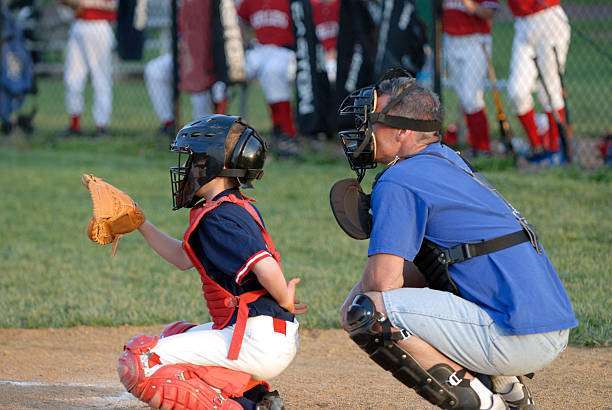
IV. The Philosophy of Catching Groove and Pocket Depth: Why MLB Catchers Can Turn Every Catch into an Art of Control
a baseball glove is to provide a stable catch groove, the depth of which directly affects catch success rate and control. One of the biggest differences between MLB catchers and amateur catchers is the degree of “pocket shaping.” Professional catchers shape their gloves over time according to their catching habits, creating a unique curvature in the groove. They can control the ball’s stopping point in the baseball glove and more easily execute instant releases and throws.
Amateur catchers can only rely on repeated use to naturally shape their rim, lacking professional oiling and long-term, regular adjustments. The shape of their pockets is often an “unstable, random result.” This not only affects their catching feel but also increases the probability of errors.
Therefore, the difference in spending power between the two is not just a difference in hardware, but also a difference in “usage habits” and “equipment culture”.
V. The Philosophy of Weight and Reaction: Why are professional catchers able to get ahead?
Heavier baseball gloves offer better protection but reduce reaction time; lighter ones provide better agility but less shock absorption. In MLB, catchers choose their baseball glove weight based on their role in the game. Some catchers prioritize stability, while others prioritize quick reactions, and teams also recommend weight ranges based on the catcher’s style.
Grassroots catchers often use lighter gloves than professional catchers because lighter gloves are cheaper, have thinner leather, and are simpler to padded. However, while these lighter gloves may make the catcher feel “easier” at first, they become less effective under the impact of real catching, leading to pain, decreased control, and even short-term wear or breakage.
This is why, for the same catching motion, professional catchers can achieve extreme consistency, while grassroots catchers need to expend more energy controlling the reaction force. The philosophy of weight is an understanding of the “balance between reaction speed and safety,” and the balance in MLB is far more precise than at the grassroots level.
VI. The philosophy of binding and durability: Why are MLB catchers almost unafraid of their baseball glove breaking, while grassroots catchers are always repairing it?
The straps are crucial to the structural stability of a baseball glove . MLB baseball gloves typically use a full leather strap system, or even specially abrasion-resistant leather, to ensure they don’t loosen or break under high-speed impacts during catching. The more stable the strap system, the more consistently the catcher can maintain the glove shape during the game , resulting in more consistent catching performance.
Grassroots baseball glove straps are often made of thinner leather, and sometimes not even pure leather, making them particularly prone to loosening or cracking after frequent use. Many grassroots catchers need to constantly re-strap their glove during games and even have to carry tools with them for post-game adjustments.
This difference illustrates the “structural philosophy” between professional and amateur. A professional catcher’s baseball glove is a long-term weapon, while an amateur catcher’s glove is more like a tool to “solve immediate needs.”

VII. Brand and Cultural Philosophy: The Identity Gap Behind Gear is Far Greater Than You Think
In MLB, the baseball glove is more than just equipment; it’s a status symbol. Brand selection, color combinations, embroidery, and even the style of the baseball glove all become ways for catchers to showcase themselves. Brands like Wilson, Rawlings, and Mizuno often establish deep collaborations with star catchers, making the baseball glove a vehicle for cultural dissemination.
Grassroots catchers have relatively limited brand exposure and are more influenced by price. Some grassroots catchers do have brand preferences, but due to budget and limited choices, these preferences cannot form a “style system” like those of MLB catchers.
Gear culture not only influences appearance but also determines the user’s self-awareness and sense of belonging. Professional catchers seek personal identity in brand philosophy, while grassroots catchers often lack this symbolic value resonance.
8. Training and Baseball Glove Integration Philosophy: The real difference is often not the equipment, but “how to use the equipment”.
MLB catchers dedicate a significant amount of time to breaking in their gloves , including regular hot oiling, catch drills tailored to different pitchers, and intensive training for specific moves. They can even choose different break-in periods based on their workload to ensure each glove is in optimal condition.
Grassroots catchers have limited training time and resources, making it difficult to provide such meticulous maintenance. Their baseball glove integration often relies on natural use rather than proactive coaching, which prevents the baseball glove from achieving the performance of professional catchers, and causes the gap to widen continuously over time.
The ultimate difference in equipment philosophy lies not in the gloves themselves, but in whether the user can form a “long-term collaborative relationship” with the equipment.
Conclusion
The baseball glove serves as a clear dividing line between professional and grassroots baseball because it simultaneously embodies multi-dimensional meanings, including function, culture, structure, technology, and emotion. The equipment philosophy of MLB catchers represents the pursuit of excellence, while the equipment reality of grassroots catchers represents the vitality of grassroots baseball.
The difference between the two is not simply a matter of strength versus weakness, but rather a reflection of different stages of baseball culture. Understanding these differences can actually help more grassroots catchers realize that equipment doesn’t have to be expensive, but rather that it must be correctly understood, used, and maintained.
The real difference is never the baseball glove itself, but the trust, training, and synergy that the catcher and the baseball glove build together.