3 design truths about the baseball glove : It’s definitely not just a bigger, ordinary glove.

I. The Misunderstood “Enlarged Version”: Why is the baseball glove always misread?
Among baseball equipment, the baseball glove is one of the most easily misunderstood items. To many newcomers to baseball, it simply appears as a “larger, thicker, and bulkier” version of a glove, seemingly differing from infield or outfield gloves only in size. This understanding isn’t entirely absurd, as baseball gloves do differ significantly in volume, weight, and shape. However, this intuitive impression masks fundamental differences in their design logic.
If it were simply a matter of “larger, regular gloves,” then catchers could easily use thicker infield gloves to get the job done. However, the reality is quite the opposite. In any environment with a certain level of game intensity, regular fielding gloves, once forced to assume the role of catcher, often reveal deficiencies in protection, structural instability, and loss of control within a very short time. This is not because the catcher’s position is “more demanding,” but because the physical conditions and defensive logic faced by the catcher have fundamentally deviated from the scope of regular fielding.
the baseball glove didn’t start with “how to catch the ball,” but rather with “how to control a high-speed ball in the shortest amount of time and continuously repeat this action.” This different starting point determined that its material selection, structural layout, and usage would all take a completely different direction from ordinary gloves. To understand the glove , one must first abandon the “enlarged version” mindset.
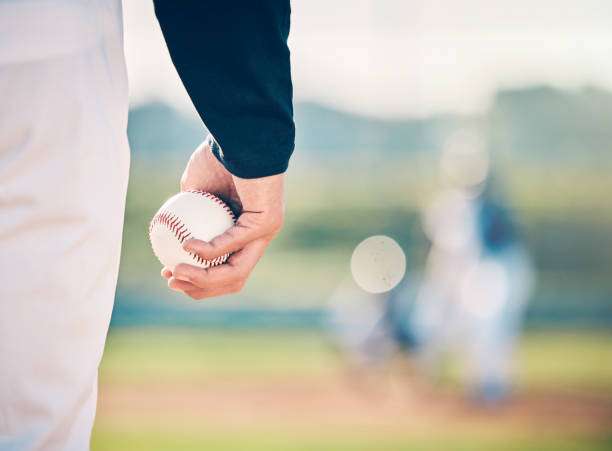
II. One of the design truths: The baseball glove is not a catching tool, but an impact management system.
of the baseball glove lies in the fact that it is not simply a catching tool, but a highly specialized impact management system. Its primary purpose is not to keep the ball “in the glove,” but to control the release path of impact energy in a very short time.
In infield or outfield defense, the ball has usually traveled a certain distance and its speed has decreased, and the fielder can use body movement to disperse the impact. However, when the catcher catches the ball, it is often at almost the original speed after the pitcher’s release, with a short flight distance, minimal deceleration space, and highly concentrated impact force. This means that the glove cannot rely on the “catching action” to absorb the impact; it can only rely on its own structure to absorb the energy.
Therefore, the design focus of a baseball glove is not on the softness of the leather, but on how the leather density, number of layers, and padding structure work together. The inside of the glove typically employs a multi-layered cushioning structure, with each layer undertaking a different stage of energy absorption. The outermost layer initially disperses the impact, the middle layer slows energy transmission, and the innermost layer reduces the return of vibration to the palm. This layered logic makes the baseball glove appear visually substantial, but its true value lies in its internal structure, not its external dimensions.
viewing the glove as a “larger catching surface” overlooks a crucial fact: its catching area isn’t designed to increase tolerance, but rather to stabilize the center of impact. The position, depth, and concentration of the catching pocket are all aimed at “locking in” the high-speed ball the moment it enters the glove, preventing it from rolling or bouncing inside. This locking ability is fundamental to a catcher’s consistent performance in high-speed games.
III. The reason why ordinary gloves cannot replace them: Impact frequency changes everything.
Another common misconception is that any ordinary glove, thick enough, is sufficient for the catcher role. However, what truly determines the design direction of a baseball glove is not just the intensity of a single impact, but the frequency of those impacts. The catcher is the only position on the court that catches the ball on almost every pitch; this high-frequency repetition necessitates a completely different design logic.
A standard field glove faces unpredictable, low-frequency, but occasional high-intensity impacts, while a baseball glove faces highly predictable, continuous medium-to-high-intensity impacts. The former emphasizes flexible responses, while the latter emphasizes long-term stability. Under these conditions, even a slightly lower single impact can be rapidly amplified by a sufficient number of repetitions.
Therefore, gloves must be designed with “fatigue” as the norm. They must maintain their pocket shape, cushioning, and handling feedback even after hundreds of catches. This expectation of fatigue directly determines the glove ‘s conservative material selection and redundant structural design. This is not wasteful, but rather a realistic response to the usage environment.
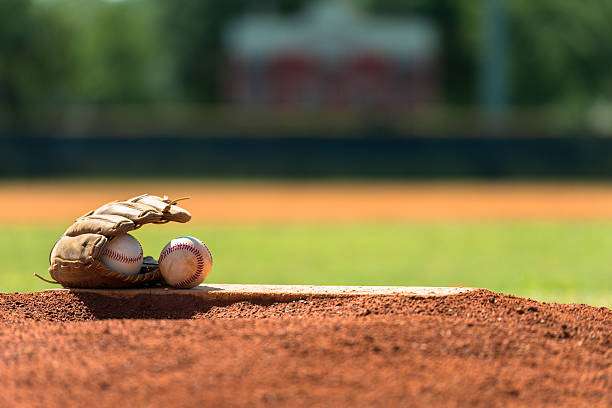
Fourthly, the second design truth: The shape of a baseball glove is not for “easy catching,” but for “easy control.”
A close comparison of the baseball glove with other defensive gloves reveals a striking but often overlooked difference: the overall silhouette of the baseball glove doesn’t prioritize maximizing surface area. Instead, it tends to be more compact and enclosed. This design isn’t intended to limit catching range, but rather to enhance control.
In a catcher’s job, catching the ball is only the first step. The real challenge lies in quickly stabilizing the ball after catching it and preparing for the next move. This includes securing the ball in the glove pocket, minimizing wobbling, preventing bounce, and quickly making the pass when necessary. The baseball glove ‘s shape is designed around these actions.
The deep, concentrated pocket structure allows the ball to quickly lose momentum upon entering the glove, reducing the likelihood of it rolling inside. This design sacrifices some tolerance for “anything goes” but gains greater stability and predictability. In high-level matches, this predictability is far more important than the receiving area.
Furthermore, baseball gloves typically have a more fixed finger structure, not emphasizing the individual finger dexterity of infielders. This is because the catcher’s primary control relies not on finger separation, but on overall opening and closing and wrist control. This design allows the catcher to maintain consistent glove feedback during repeated catches, reducing variations caused by finger fatigue.
V. Implicit Design Logic Related to the Referee’s Perspective
the baseball glove also serves a purpose not explicitly stated in the instruction manual: to complement the umpire’s perspective. The catcher is the only defender who frequently needs to “show the result” to the umpire during a game, and the glove plays a crucial role in this process.
A stable glove shape and clear feedback upon catching the ball make it easier for referees to confirm whether the ball has entered the strike zone. The glove’s performance at the moment of contact often influences the referee’s intuitive judgment more than the ball’s actual path. Therefore, gloves must be designed to minimize post-catch wobbling and uncertainty.
This is why a glove , even after aging, can still catch the ball but may no longer be suitable for game use. Its “catching ability” may still be there, but its “playability” has declined. This difference is something that ordinary defensive gloves almost never encounter.

Sixth, the third truth about the design: The baseball glove was designed from the beginning with the assumption that it “would be consumed”.
The third, and most brutal, design truth is that the baseball glove was designed from the outset with the assumption that it would be rapidly consumed. Its goal was not to “maintain its original state in the long term,” but rather to “remain controllable during performance degradation.”
Unlike regular gloves, which improve with use, the break-in period for a baseball glove is more of a finite curve. It reaches its ideal state for a period of time, and then gradually declines in performance. This decline doesn’t mean it becomes unusable, but rather that it no longer meets the demands of high-intensity performance in certain key areas.
Because of this expectation, gloves are often designed with a focus on predictable aging paths. For example, pocket areas will deform first, rather than the overall structure becoming unstable; padding materials will gradually compress, but will not suddenly fail. This “controlled consumption” allows catchers to sense changes during use and make adjustments or replacement decisions in advance.
From this perspective, gloves don’t fail faster; rather, they are more honest about their use. They don’t try to hide wear and tear, but rather incorporate it into the design logic itself.
7. Why it’s said that a baseball glove can never be just an enlarged version of a regular glove.
When these three design truths are put together, it becomes clear that the difference between a baseball glove and a regular field glove goes far beyond just size and thickness. They address entirely different problems and cannot be solved simply by enlarging them.
The design logic of a regular glove is “to catch a ball in various uncertain situations,” while the design logic of a regular glove is “to manage impacts and control outcomes in highly certain but extremely repetitive situations.” The former emphasizes flexibility, while the latter emphasizes stability; the former pursues extensibility, while the latter pursues focus. Neither of these two logics is superior or inferior, but they should never be confused.
This is why those who truly understand baseball glove are often better able to grasp the complexity of the catcher’s position. It’s not about passively receiving the ball from behind, but about using your body and equipment to continuously confront the most direct forces in the game.
VIII. Conclusion: The baseball glove is designed to withstand reality.
The baseball glove isn’t romantic; it doesn’t pursue lightness or emphasize agility. Its design always revolves around a practical problem: how to maintain stability and controll ability under high speed, repetitive, and unavoidable impacts. This design philosophy makes it look bulky, yet it demonstrates irreplaceable value when truly needed.
When we stop seeing the baseball glove as “a bigger ordinary glove” and instead see it as a tool specifically designed to deal with extreme conditions, perhaps we can also have more respect for the position itself.
FAQ
- Q1: Why can’t baseball gloves be made as thin and light as outfield gloves?
Because catchers face balls that come at higher speeds and with greater frequency. Thin and light designs cannot provide sufficient cushioning and structural stability during long-term use, which can easily lead to hand injuries and a rapid decline in performance. - Q2: Is it a good thing or a bad thing for a baseball glove to soften after prolonged use?
Within a certain range, this is a normal break-in phenomenon. However, if the cushioning capacity decreases significantly or the pockets collapse, affecting stability, it means that the glove has entered the performance degradation stage and needs to be adjusted or replaced. - baseball glove really necessary for amateur games ?
As long as the pitching speed and frequency reach a certain level, a dedicated baseball glove can significantly reduce the risk of injury and improve catching stability, making it very valuable even in an amateur environment.