Baseball Glove Pro Catcher’s Secrets: 9 Must-Know Glove Training Techniques

In the high-pressure environment of professional baseball, the baseball glove , seemingly just a tool for catching the ball, becomes a symbol of tactical expression, rhythm control, and mental stability in the hands of a professional catcher. Every top catcher invests a significant amount of time in fine-tuning their glove to ensure it performs perfectly in sync with their individual movements during the game. A baseball glove isn’t something you can buy and use immediately; every detail affects catcher feedback, throw speed, protection level, and the accuracy of tactical information transmission. The closer the glove’s condition is to the catcher’s muscle memory, the more stable its performance—a key element often overlooked by rookies but considered a secret by professional catchers.
Professional catchers know that an untrained baseball glove can not only affect catching feel but also have a cascading impact on the game’s rhythm, leading to issues such as delayed throws, inconsistent corner catches, disrupted pitching rhythm, and even short pass errors. Through scientific and systematic training methods, the glove can become a catcher’s second muscle, helping them complete the entire reaction process from judgment to catching and executing the move in a very short time. The following article will delve into nine baseball glove training techniques highly valued by professional catchers, helping you understand why top players can achieve fluid movements, stable catches, precise feedback, and maintain consistent glove performance even in high-intensity games.
of a baseball glove and improving catch stability
the baseball glove ‘s opening is a crucial adjustment that many amateur catchers overlook, but which professionals highly value. The opening angle determines the direction of the crease and the ball’s sliding path as it enters the baseball glove . An angle that is too narrow will make it difficult for the baseball glove to catch breaking balls instantly, especially when the catcher needs to move quickly, and the ball is prone to bouncing out of the glove. An angle that is too wide may make the crease loose, unable to concentrate power to absorb the ball’s speed, causing the glove to vibrate when catching high-speed balls.
Professional catchers adjust the glove’s opening angle by squeezing, flipping, or turning it inward to match their catching posture, ensuring the glove provides a stable visual window in the most comfortable position for their body. This fine-tuning not only improves stability but also shortens the catcher’s judgment by several crucial milliseconds, often resulting in a successful catch or a missed opportunity. In the high-intensity pace of professional games, every millisecond can change the course of the game; therefore, adjusting the glove’s opening angle is of decisive importance in training a baseball glove .
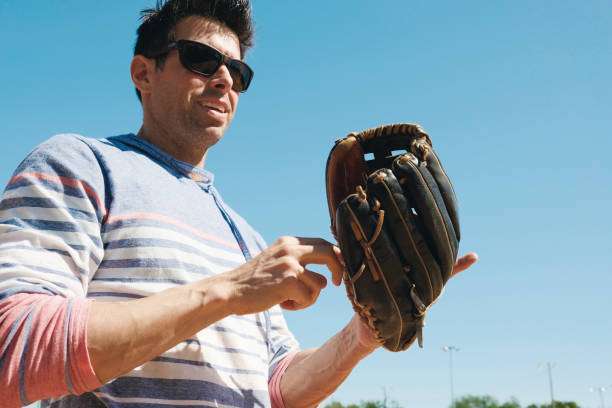
Adjusting the catching depth makes catching the ball easier and more reliable.
The crease is the soul of a baseball glove , and adjusting its depth is a crucial technique for professional catchers. If the crease is too shallow, the ball bounces easily, forcing the catcher to use extra force to grip the glove and stabilize it; conversely, if the crease is too deep, it reduces the speed of the catcher’s pass, affecting their ability to throw quickly. The logic behind professional catchers’ crease adjustments is to ensure that the depth is just right to create a suction effect when a high-speed ball falls in, while maintaining sufficient rebound force when trapping the ball, allowing it to be instantly secured.
They work by repeatedly tapping the nut with a specialized hammer, practicing catching motions extensively, and even having pitchers practice high-speed throws, gradually developing the optimal nut depth in a dynamic environment. This tuning not only makes catching more stable but also allows catchers to better feel the center of the ball during the game, resulting in smoother transitions between catching and releasing the ball. Precise nut depth tuning is a key foundation for the glove’s stability during games.
Balance between finger hardness and force transmission
a baseball glove plays a crucial role in ball control and overall grip. Professional catchers often adjust the finger stiffness based on their finger strength, catching style, and personal habits. Some catchers prefer stiffer fingers because the stiffer structure provides greater stability, allowing the glove to maintain its shape upon impact and preventing deformation. Other catchers prefer slightly softer fingers because the softer structure allows for faster wrapping, which is especially suitable for catching breaking balls.
Professional catchers use methods such as constantly kneading leather, applying conditioning oil, and fixing the shape of their fingers to achieve the optimal finger stiffness for themselves. They understand that finger adjustment is the core of catching feel, and different stiffness will also change the sound when the ball hits the glove, thus affecting the catcher’s judgment of the ball’s spin and landing point. The correct finger stiffness allows the catcher to clearly feel the center of the ball at the moment of catching, making the entire catching action more controllable.
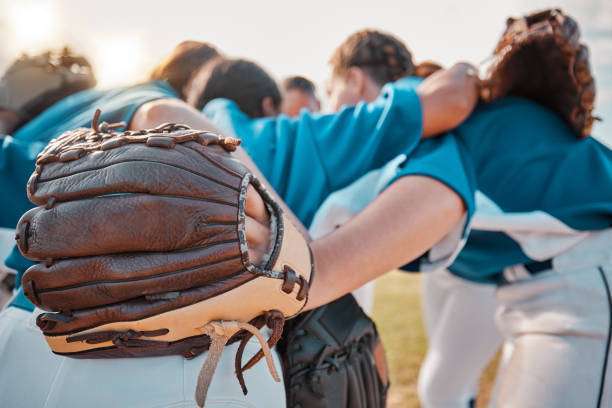
The shaping of the palm’s folds determines the speed of movement.
the baseball glove is the most “personalized” area for adjustment. Every professional catcher adjusts the crease according to their natural hand closing direction, so that the glove can complete the ball-clamping action with minimal resistance when closing. A natural crease allows the catcher to lock the ball in effortlessly after catching it and quickly transition to the next stage of the action.
Professional catchers typically use methods such as steam heating, weight pressing, and continuous squeezing to shape the zigzag pattern, allowing the palm to quickly and firmly wrap around the ball the moment it enters the air. Proper zigzag reduces unnecessary friction, enabling the catcher to complete the catch-to-hand movement in a very short time, which is especially crucial when catching runners or corner balls. Zigzag shaping significantly improves the catcher’s agility and is an important technique for enhancing overall rhythm and coordination.
Weight fine-tuning and rhythm control ability
a baseball glove affects a catcher’s arm reaction speed, shoulder strain, and endurance. Professional catchers determine glove weight based on the season, pitcher type, and their own physical condition. Heavier gloves offer more stability and protection when catching fastballs, but the downside is that they cause arm fatigue more easily during long games; lightweight gloves offer more flexibility, but can cause hand tremors when facing heavy pitchers.
To achieve optimal balance, professional catchers fine-tune the weight of their baseball glove by replacing the sweat-wicking layer, thinning the leather, and adjusting the finger lining. This precise weight adjustment not only makes the catcher more energy-efficient during the game but also ensures consistency in the catching motion from start to finish. When the weight of the baseball glove is synchronized with the body’s rhythm, the catcher can create a smooth transition between catching and throwing the ball. This rhythmic advantage often determines success or failure in crucial moments.
Baseball glove: The structure of the back of the hand affects the force of catching and pressing.
The transfer of power from the back of the catcher’s hand at the moment of catching the ball affects the degree to which the entire baseball glove locks onto the ball. Professional catchers adjust the shape of the back of their glove based on their hand strength and bone structure. Some deliberately lower the back of their hand structure to concentrate the power point; others adjust the tension in the back to make the glove open more easily, which is suitable for catching balls with large changes of direction.
The adjustment of the back of the hand not only affects the stability of catching the ball, but also the efficiency of the catcher’s quick ball transfer. The more the structure conforms to the catcher’s body structure, the more energy-efficient the catching process is, and the less hand fatigue accumulates, thus ensuring the competitive state throughout the game. Many professional catchers say that the adjustment of the back of the hand is the most difficult for outsiders to notice, but it has the greatest impact on them personally.
The sound of the glove becomes an important factor in judging the quality of the ball.
Professional catchers rely heavily on their hearing to determine whether the ball has landed solidly in the crease, making the sound of the baseball glove crucial. A dull sound may indicate that the leather is too stiff or the crease lacks sufficient absorption; a crisp sound may suggest that the structure is too thin, causing the catcher to experience greater impact when catching high-speed balls.
To achieve the desired acoustic feedback from the baseball glove , catchers adjust details such as leather tension, palm thickness, and humidity control. This auditory memory allows catchers to quickly determine the ball’s center during a game, avoiding misjudgments due to limited visibility or excessive ball speed. Accurate acoustic feedback is an invisible weapon for professional catchers to maintain consistent judgment.
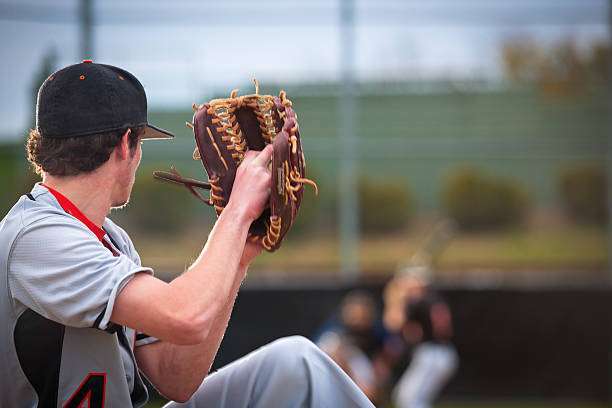
The feel of the inside of the glove affects the catcher’s psychological stability.
Professional catchers place great importance on the feel of the inside of their glove, as it is a key source of trust between them and the baseball glove . A lining that is too stiff can cause discomfort and friction to the fingers during long games, thus distracting the catcher; while a lining that is too soft will make it difficult for the catcher to feel the ball clearly when catching it.
They will use methods such as repeated wearing, changing the lining, and heating to soften the glove to make the inside of the hand fit more naturally. The snug feel of the inside not only improves the feel of catching the ball, but also gives the catcher a sense of stability psychologically, allowing them to remain calm in high-pressure games.
The final match between gloves and motion memory
The ultimate training goal for professional catchers is to make the baseball glove a natural part of their body, so that the catching motion is performed without conscious thought. They will conduct thousands of repetitions to synchronize the glove with their arm movements, allowing muscle memory to deeply recognize the weight, rebound, angle, and sound of the glove.
When baseball glove is fully integrated into the catcher’s movement system, the catcher can make judgments faster, catch the ball more steadily, pass more accurately, and react decisively to crucial plays. This is the true secret of professional catchers and the ultimate goal of baseball glove training.