of the Baseball Glove: How Can It Reliably Catch Every High-Speed Fireball?

a baseball glove: to withstand high-speed impacts and maintain the team’s rhythm.
Baseball catchers face hundreds of high-speed pitches every inning, with ball speeds often exceeding 140 kilometers per hour and even easily surpassing 150 kilometers per hour in the professional arena. In such a high-density, high-intensity catching environment, the baseball glove not only needs to protect the catcher’s hands but also must complete complex tasks such as cushioning, securing, locking the ball, and preparing to throw within a short period of time. The baseball glove is a piece of equipment that needs little explanation but bears immense responsibility; it is closely linked to the pitcher’s teamwork, the stability of the catch, the defensive rhythm throughout the game, and even the catcher’s confidence.
Many people’s first impression of a baseball glove is its bulkiness, sturdiness, and round shape. But what truly allows a catcher to remain rock-solid on the court is the collaboration of dozens of meticulously designed features inside the glove. This article will delve into ten key design principles to help you understand why the baseball glove can maintain stability, accuracy, and safety under extreme challenges.
Thickened buffer layer structure: absorbs the initial force of the fireball impact.
of a baseball glove is to withstand the high-speed balls thrown by the pitcher. Without sufficient cushioning, a catcher’s hand can become numb after dozens of balls, and over time, this can lead to tendonitis, nerve compression, or even long-term damage. The baseball glove’s cushioning layer uses a multi-layered material combination, including a thick leather layer, a soft lining, high-density padding, and a support structure. These materials are scientifically arranged and pressed together, gradually thickening from the palm to the base of the fingers, dispersing the impact of the ball the moment it touches the glove.
Different brands use different cushioning technologies, but the goal is the same: to allow catchers to maintain a stable hand feel when facing high-speed balls, without letting violent vibrations affect their next pitch decision. The design of the cushioning layer determines whether a catcher can maintain consistent performance over the long term and can even affect their defensive performance throughout the entire season.

Deep pocket structure design
of a baseball glove is its deeper pocket design compared to typical infield or outfield gloves. This deeper pocket allows for greater containment of high-speed balls as they enter the glove, preventing them from bouncing off the edge due to excessive speed. Catchers often need to consider the variability of pitches when catching, including fastballs, changeups, forkballs, and curveballs, with the deeper pocket making it easier to anticipate the ball’s final trajectory.
A deep pocket is not just about depth; it also encompasses a combination of the pocket’s curvature, angle, and opening width. This structure allows the ball to slide towards the center of the palm the moment it enters, preventing it from deflecting and improving catching accuracy. Professional catchers often say that a good glove “naturally sucks the ball in,” and a deep pocket is the foundation of this feel.
Closed mesh structure: key to stable ball feel
Baseball gloves typically feature a closed mesh design, a stark contrast to the open mesh used in other positions. This closed mesh provides greater stability to the glove, preventing the ball from veering off course due to an excessively large opening when the catcher receives it. This design combines strength and flexibility, maintaining the glove’s shape and allowing the ball to stay more centered.
A closed mesh also increases the overall durability of the glove and reduces deformation caused by prolonged use. Catchers use their gloves far more intensely than players in other positions during the season, so the stability of the mesh structure directly determines the glove’s lifespan and consistency with the ball feel.

High-thickness finger back protection
Catchers not only need to catch the ball, but they also often need to face the pitcher with the back of their hand so that the pitcher can see a clear target before the shot. When a high-speed ball hits the back of the glove’s fingers, the impact is extremely strong, so the thickness of the finger protection is crucial. Baseball glove fingers are usually reinforced with extra leather layers, reinforcing materials, or padding to ensure that the catcher can withstand the powerful force without injury.
This protection not only ensures safety but also affects the catcher’s psychology. When a catcher knows that their glove is strong and protective enough, they can reach out to catch the ball with more confidence and will not pull back for fear of pain, thus missing a crucial angle to receive the ball.
Curved cut to fit the palm
A good baseball glove must be an extension of the catcher’s hand, not an external tool. Therefore, the cut angle of the inside of the glove, the curvature of the leather, and the distribution of stitching are designed according to the natural curve of the hand, allowing the catcher to feel a natural fit when opening and closing the glove. The catcher’s movements in a game are extremely complex; from signaling to catching, blocking, and passing, every opening and closing motion must be quick and precise.
The better the fit between the hand and the ball, the stronger the catcher’s control over the ball, and the easier it is to make subtle adjustments at the moment of catching. Professional catchers often say that every glove needs to be “re-broken in” to get a feel for it, and this process of breaking in is actually a continuation of the fit design.
Strengthen palm structure
A baseball glove bears the brunt of the impact and is also the most complex part of its construction. The palm needs not only thickness but also a balance between strength and softness. An overly hard palm would put too much strain on the catcher’s wrist, while an overly soft palm would make the ball unstable. The palm structure is typically formed by pressing multiple layers of leather, using a combination of textures in different directions to effectively disperse impact force.
The palm design also allows catchers to lock onto the ball more quickly, preventing it from bouncing due to high speed. A good palm design allows catchers to quickly transition to a passing motion after receiving the ball, without wasting time while the ball is swaying inside the glove.
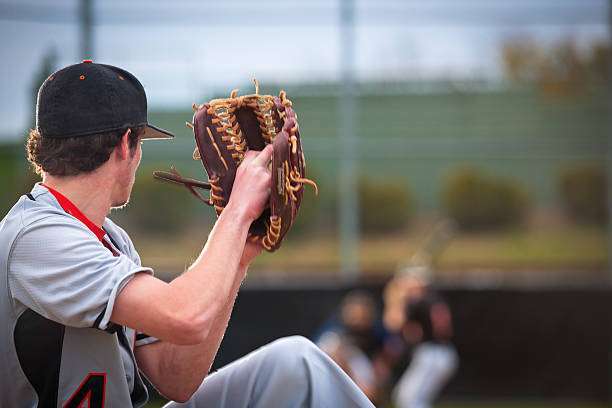
Glove opening angle design
The angle of the glove’s opening determines the ball’s trajectory as it enters the glove. If the opening is too narrow, the ball is likely to hit the edge; if it’s too wide, it’s difficult to concentrate power and control the ball. The opening of a baseball glove is usually precisely calculated to allow the catcher to have a clear view of the target from the pitcher’s perspective while maximizing catch percentage.
The angle of the opening also affects the catcher’s ability to block the ball. In low-ball situations, the catcher must quickly adjust the direction of their glove so that the ball can enter the pocket area directly along the opening, minimizing deviation.
Leather grade and durability
Baseball gloves endure far greater stress than other parts of the body, making leather quality a crucial factor in determining glove lifespan. High-grade leather maintains its elasticity even under prolonged contact with high-speed balls, preventing deformation or collapse from repeated impacts.
Professional catchers fear nothing more than inconsistent feel when using their gloves, as this disrupts their pitching rhythm. High-quality leather not only improves durability but also maintains a consistent feel, allowing catchers to maintain a consistent performance throughout the long season.
Seam layout technology: Details determine stability
A baseball glove is not simply a matter of connecting leather pieces; it’s the core of the glove’s structure. The direction of the stitching determines whether the glove can withstand deformation after high-speed impacts, whether the connection points are prone to fatigue, and even whether it affects the opening and closing speed. Modern baseball gloves use a cross-reinforced stitching layout, making the structure stable and less prone to loosening.
The more stable the stitching, the smoother the catcher’s movements. Especially in crucial games, a single loose stitch can render the entire glove unusable.
Lining and sweat-wicking technology: Hidden advantages in long games
Catchers often swoop down to catch multiple innings in a row, and with their heavy protective gear, heat and sweat can easily build up inside their gloves. If the lining material is of poor quality, the catcher’s hands will become slippery, leading to decreased control when catching the ball. Therefore, the lining must not only be soft but also have sweat-wicking and breathable properties.
A baseball glove can keep the catcher’s hands dry during long games, improving agility and catch stability. This seemingly insignificant technique is an invisible key to a catcher’s consistent performance.