A baseball glove endures: the true cost of receiving 100 high-speed balls in a single game.
I. When “catching the ball” becomes a continuous impact behavior
In baseball, the catcher is the only position that is almost constantly in direct contact with the ball. Every pitch means a direct physical impact, and regardless of whether the ball enters the strike zone or is penalized by the umpire, the baseball glove must complete the entire process of receiving, cushioning, and controlling it. Because of this highly repetitive contact, the glove is not enduring “occasional impacts,” but rather a continuous impact environment.
Many people underestimate the total amount of impact a baseball glove experiences in a single game. A full game often involves over a hundred pitches, and the actual number of contacts is even higher when pick-offs, screens, touches, and warm-up pitches are taken into account. This means that the baseball glove endures repeated head-on impacts from high-speed hardballs over several hours, and this impact is not lessened by the catcher’s experience.
a baseball glove is tested repeatedly under these extreme conditions of use. It must not only protect the hands from the first impact, but also maintain structural and functional stability after the hundredth and hundred and fiftyth impacts. To understand why a baseball glove is so heavy, why it ages so quickly, and why it is so expensive, one must truly understand the types of impacts it withstands during a game.
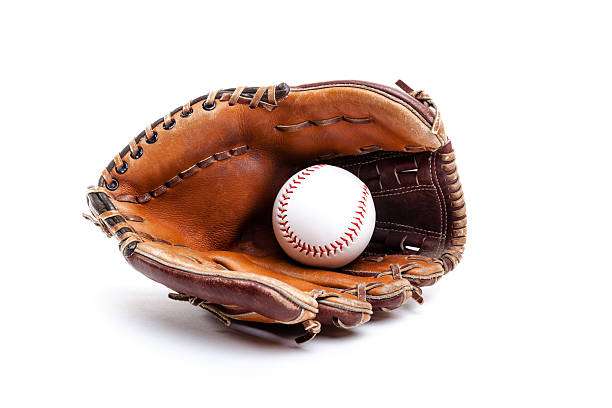
II. High-speed straight ball impact: The most basic yet most energy-consuming technique.
Of all impact types, the high-speed fastball is the most common and fundamental. It constitutes almost the entire load used in a baseball glove . The characteristics of a fastball are stable speed, a straight trajectory, and concentrated kinetic energy, making each reception feel like a head-on collision.
For a baseball glove, the impact of a fastball is anything but “gentle.” Even in high-level amateur matches, fastball speeds often exceed 120 kilometers per hour, and in professional matches, this figure rises even further. Despite its small mass, the ball carries a considerable amount of kinetic energy at high speeds. When the ball enters the baseball glove , there is almost no extra room for deceleration; all the kinetic energy must be absorbed in a very short time.
The cruelty of this impact lies not in whether a single force exceeds the limit, but in its repetitive nature. A baseball glove has to withstand similar intensity fastball impacts repeatedly during a game, which continuously compresses the internal filling material, causing it to gradually lose its elasticity. As the game progresses, catchers can often clearly feel the change in the feedback when catching the ball; the originally crisp cushioning gradually becomes harsh.
This change doesn’t mean the glove is “broken,” but rather that it’s depleting its own cushioning reserves. The glove ‘s design is based on this depletion; it must slow performance degradation through numerous repeated impacts, rather than striving to remain in its initial state indefinitely.
III. Impact from Changing Balls: The Additional Burden Caused by Direction and Spin
If a fastball tests a glove’s ability to absorb pure kinetic energy, then the impact of a change-of-speed ball is more like a test of complex stress. Sliders, curveballs, and change-of-speed balls often have significant spin and trajectory changes when entering a baseball glove , which means the impact direction is not always directly towards the center of the glove.
When the ball enters the glove at an off-center angle, the impact force is no longer unidirectional, but instantly generates torsional and shear stresses on the glove structure. These stresses concentrate at the pocket edges, seam connections, and the area between the thumb and forefinger, placing higher demands on structural stability.
For catchers, catching breaking balls often requires more proactive glove control than simply waiting for the ball to enter. This action itself puts extra strain on the glove. Furthermore, the friction between the high-speed spinning ball and the inside of the glove accelerates wear on the leather surface.
While breaking balls may not hit as many times as fastballs, their destructive effect on the glove structure is more insidious. Many catchers find that after a season with frequent breaking ball use, the glove is more prone to sagging or loosening in specific areas. This is not accidental, but rather the result of long-term accumulation of complex stress.
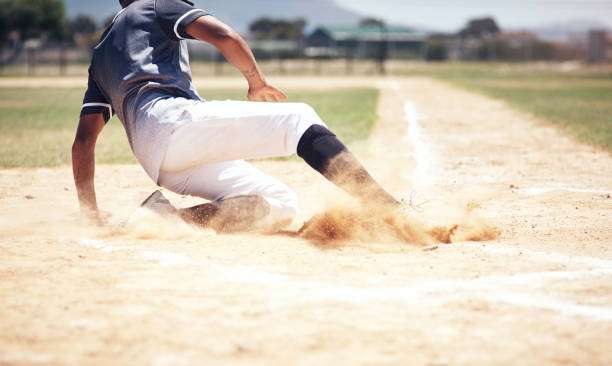
IV. Brushing the Baseball and Off-center Impact: The Most Unpredictable Test
Of all impact types, glide and eccentric impacts are the most unpredictable and easily overlooked. They often occur at the moment the batter swings, with the ball changing direction and entering the baseball glove on an irregular trajectory , sometimes even accelerating or changing direction suddenly over a very short distance.
The danger of these impacts lies in the fact that they are almost impossible to completely absorb with standard catching motions. The ball may hit the glove edge, fingers, or less frequently used areas, causing the impact to concentrate in non-core cushioning areas. For a baseball glove , this is a load that exceeds conventional design assumptions.
A ball grazing on the ground is often accompanied by unstable spin and noise, which not only increases the difficulty for umpires to judge but also makes it harder for catchers to accurately predict the catching point. When the impact occurs at the edge of the glove, the inner padding is often thinner, with limited cushioning, making it easier for vibrations to be transmitted to the hand.
These seemingly random impacts constitute a significant source of wear and tear on a baseball glove . Unlike a fastball, they don’t follow a predictable pattern, yet they can cause localized damage to the structure unexpectedly. This is why even if a baseball glove is in good overall condition, it can still age prematurely in certain areas.
V. Blocking and Impact: Extreme Pressure from Close Range
Blocking is one of the most physically demanding actions in a catcher’s job, and during this process, the baseball glove often endures extreme close-range impact. When a pitch misses its target, the ball may suddenly change direction within a very short distance, slamming directly into the ground or the catcher’s body.
At the moment of blocking, the baseball glove does not meet the incoming ball in a standard catching posture, but is forced to absorb the out-of-control impact as part of the body’s defensive line. This impact often lacks buffer time, is concentrated in force, and has an unstable direction.
Compared to receiving a ball normally, the impact of blocking a ball is more likely to be felt on the sides and lower edge of the glove. These areas are not designed as primary cushioning zones, yet they are frequently used in actual matches. Long-term blocking training and matches will significantly accelerate wear and tear on these areas.
The impact of a ball hitting the ground is accompanied by a bounce, increasing the unpredictability of the impact. The ball may deform or change direction after contact with the ground, causing the glove to withstand a sudden surge of impact force. This complex environment is one of the reasons why the baseball glove is considered the “most brutal.”
VI. The cumulative effect of 100 impacts in a single game
When these four types of impacts occur alternately in a game, the pressure on the baseball glove is far more than simply additive. High-speed fastballs constantly deplete cushioning capacity, breaking balls apply complex stresses, grazing balls cause localized damage, and block impacts test the limits of protection. Together, they constitute a highly integrated load environment.
In this environment, the performance of a baseball glove does not change linearly. Sometimes the glove performs steadily in the first half of the game, but suddenly shows a significant change in performance in the second half. This is not accidental, but rather a result of the internal material reaching a critical point under accumulated stress.
This is why catchers are often exceptionally sensitive to the condition of their gloves. They can detect subtle changes through feedback from the catch and adjust their catching methods or game strategies accordingly. This high degree of interaction between the catcher and their equipment is a unique experience of the catcher position.
VII. The Real Cost: More Than Just Glove Wear and Tear
a baseball glove endures isn’t just reflected in the aging of the leather and padding materials. Prolonged, high-intensity impacts are also transmitted through the glove to the catcher’s hands, wrists, and forearms. Even the best-designed equipment cannot completely eliminate vibrations.
Therefore, catcher injuries are often closely related to prolonged impact. Finger joint discomfort, metacarpal fatigue, and wrist inflammation are common problems for catchers. The goal of baseball glove design is not to eliminate these problems, but rather to postpone their onset as much as possible.
From this perspective, a baseball glove is a consumable item; through its own wear and tear, it absorbs a significant amount of the impact that would otherwise directly affect the catcher’s body. This “substitute consumption” is precisely its purpose.
VIII. Conclusion: Understanding the impact is key to understanding the value of baseball glove.
Only by truly understanding the various impacts a baseball glove withstands in a single game can one understand why it is so heavy, expensive, and needs frequent replacement. It’s not for aesthetics or to appear professional, but to protect the catcher as much as possible in the most demanding environments.
Baseball gloves aren’t designed to be perfect forever; they’re designed to fulfill their purpose through constant impact. Every dent, every deformation, is a mark left by the game, and a price paid by the catcher.
FAQ
Q1: Why is a baseball glove more prone to deformation than other fielding gloves?
Because it is subjected to high-frequency, high-intensity, and multi-directional impacts over a long period of time, the internal padding and leather will gradually compress and change shape under accumulated stress, which is a normal and unavoidable process.
Q2: Can thicker gloves completely prevent hand impact?
No, they cannot completely prevent it. Thicker gloves can delay impact transmission, but this sacrifices control and feedback. The design of a baseball glove always seeks a balance between protection and control.
Q3: Do amateur catchers really need to pay attention to these impact differences?
These impacts will exist as long as there are pitches with a certain speed and frequency in a game. Understanding them helps in choosing the right glove and judging when to change gloves appropriately.
Related Posts

5 stringent requirements for baseball gloves : Why they are more brutal than any fielding glove
-
Posted by
Lily Anderson