The baseball glove pocket counter intuitive? The harsh reality determined by 3 catching angles.

1. A pocket that looks increasingly strange: Why does a baseball glove “not resemble a glove”?
Almost everyone who observes a baseball glove closely for the first time experiences a similar sense of bewilderment. Its pockets look deep and odd, off-center, and asymmetrical, even appearing awkward and unnatural when flat. By the standards of a regular fielding glove, the design of the baseball glove ‘s pockets seems almost entirely “out of place.”
Even more counterintuitively, when you actually put on a baseball glove and try to catch the ball using conventional catching techniques, you often feel awkward. The ball doesn’t seem to land naturally where you expect it to, and the wrist angle feels awkward. This experience can easily lead people to mistakenly believe that the baseball glove is just “not yet broken in” or “needs more practice,” but the truth is far more complex.
The baseball glove pocket design appears counterintuitive not because it’s illogical, but because it’s not designed for “intuitive catching.” It’s not intended for a typical fielder standing with their eyes directly on the ball, but for a catcher who is constantly in a semi-squatting or even full-squatting position, with their line of sight extremely low and their glove angle constantly changing.
Once this is understood, the strangeness of the baseball glove pocket gradually transforms into a cold and precise logic. The core of this logic is not “where the ball comes from,” but “from what angle does the catcher’s hand meet the ball.”
Second, the first angle for receiving the ball: A low ball dictates that the pocket must be “sunk”.
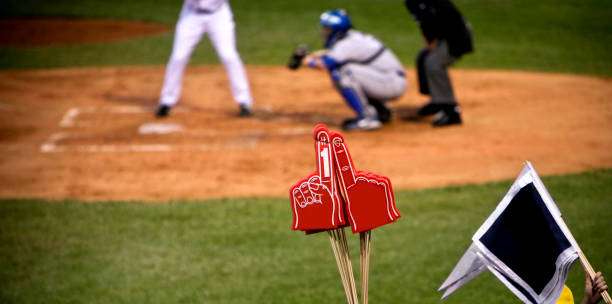
The first harsh reality for catchers is that the ball’s height is far below the horizontal line most people intuitively expect. When a typical fielder catches the ball, their body is in a standing or semi-moving position, the ball’s height varies greatly, but the overall field of vision is relatively high. However, the catcher’s normal posture is a deep squat or even a near-full squat, significantly lowering the head height.
In this position, the strike zone is directly below the catcher’s line of sight, and a large number of pitches, especially fastballs and breaking balls that aim for a low strike, will enter the baseball glove at a height close to the ground . This means that the most commonly used catching area on the baseball glove is not directly in front of the palm, but rather slightly lower and inward.
If the pocket of a baseball glove is centered and flat like a regular glove, then when a ball comes in low positions, the catcher either has to drop their wrist sharply or use the bottom edge of the glove to catch the ball. This not only increases the probability of errors but also allows the impact to be transmitted more directly to the hand.
Therefore, baseball glove pockets are often designed to be closer to the lower half of the glove, with a noticeable “sinking” effect. This design allows the catcher to easily get the ball into the center of the pocket from a natural crouching position by simply adjusting the angle of their wrist, without having to change their body structure.
This sunken pocket design may seem unconventional at first glance, but in a real game, it perfectly corresponds to the height at which catchers most often receive the ball. This was baseball glove’s first counterintuitive yet extremely practical design choice.

III. The chain reaction of receiving the ball in a low position: not comfort, but stability.
Low-positioned balls not only change the pocket position but also completely redefine the catcher’s definition of “good catch.” While standard defense emphasizes the smoothness and natural closing of the catch, catchers prioritize consistency and control.
When the ball is close to the ground, the catcher often needs to make a decision in a very short time: whether to catch or block. Once the decision is made to catch, the glove must maintain sufficient structural strength in the low position to prevent the ball from bouncing or slipping out after impact. To achieve this, the pocket must not only be low-set but also have a stronger wrap-around feel.
This wraparound design makes the pocket appear narrow or even closed when unfolded, contradicting the “unfolded area” sought by ordinary gloves. However, in low-post catching scenarios, this design effectively reduces secondary ball movement, making it easier for the catcher to achieve a stable catch.
From this perspective, the pockets in a baseball glove aren’t designed to “make catching more comfortable,” but rather to maintain control over the outcome even at the most uncomfortable catching heights. This trade-off reflects the harsh reality of catcher equipment design.
Fourth, the second angle of reception: an angled ball forces the pocket to deviate from its center.
The second key angle for a catcher to receive the ball is that the ball’s direction is not directly in front of their body center. Because catchers need to provide a stable target for the pitcher while avoiding obstructing the umpire’s view, their gloves are often positioned slightly to one side of their body, rather than completely centered.
This posture dictates that a large number of pitches will enter the glove at a slightly lateral angle. Whether it’s an inside or outside pitch, the catcher needs to make subtle adjustments with their wrist and forearm to position themselves when catching the ball, rather than by moving their body significantly.
In this situation, if the glove pocket is precisely at the geometric center, when catching an angled ball, the ball will often hit the edge of the pocket instead of the deepest part. This not only affects stability but also increases wear on the pocket edge.
Therefore, the pocket of a baseball glove often appears visually “off-center.” It is not perfectly symmetrical, but rather slightly adjusted according to the natural angle of the catcher’s dominant hand. This offset makes it easier for the catcher to get angled balls into the heart of the pocket while maintaining a basic posture.
This design seems very counterintuitive when laid flat, but once combined with the catcher’s stance and glove angle, it becomes clear that it is not off-center, but rather a recalibration for the normal posture.
V. The subtle relationship between the off-center pocket and the referee’s perspective
Catching the ball at an angle not only affects the catcher but also directly impacts the umpire’s judgment. At the moment of reception, the catcher needs to ensure the ball’s entry into the pocket appears clean and precise. The offset design of the pocket helps reduce the amount of swaying during the catch, allowing the ball to “disappear” into the pocket more quickly.
If the pocket is not positioned correctly, the catcher often needs to make an extra wrist movement to adjust the catching point when catching a diagonal ball. Even a very subtle movement can be caught by the umpire, thus affecting the decision to call a good ball.
baseball glove pockets is essentially designed to serve the “most common receiving angles” rather than the ideal situation. This design sacrifices visual symmetry but gains stability in terms of officiating.
In high-level competitions, these subtle differences often determine whether catchers and pitchers can build genuine trust.
6. The third receiving angle: The depth of the pocket is determined by the upward receiving path.
The third harsh reality for catchers lies in the path of the catch itself. Unlike most defensive positions, a catcher’s catch is often performed from bottom to top. Whether it’s a strike ball in a low position or a breaking ball close to the ground, the catcher needs to “catch” the ball into their glove just before it dips or even touches the ground.
This bottom-up receiving path is completely different from the typical lateral or top-down receiving in defense. It requires the pocket to have sufficient vertical space at the moment of receiving the ball to prevent it from bouncing out during its ascent.
This is one of the reasons why baseball glove pockets are generally deep. Deep pockets are not meant to “hold more balls,” but rather to provide enough space for the ball to slow down and stabilize as it travels upwards to receive the ball.
If the pocket is too shallow, the ball is more likely to bounce upon contact, especially with combinations of high-speed fastballs and dropping breaking balls. This bounce not only increases the risk of missed catches but also makes it difficult for the catcher to complete subsequent actions.
While deep pockets may appear bulky, they are actually the only reliable solution for dealing with upward attacks in actual catching patterns.

VII. The Cost of a Deep Pocket: Sacrificing Speed for Safety
A deep pocket isn’t without its costs. It requires the catcher to take extra time to retrieve the ball from the pocket when throwing, and it also increases the overall weight of the glove. This is one of the long-standing contradictions faced by the catcher position.
But for a catcher, the cost of missing a catch is far greater than a fraction of a second slower. This is why the pocket design of a baseball glove has always prioritized safety and stability over speed and agility.
This trade-off is almost impossible for ordinary fielding gloves, but it is an inevitable choice for the catcher position.
8. The harsh reality of three overlapping receiving angles
When three angles—low-angle, diagonal, and upward-facing catch paths—are simultaneously present, the design space for the baseball glove pocket is extremely compressed. It must simultaneously satisfy stability, containment, cushioning, and control within a seemingly contradictory range.
This is precisely why the baseball glove pocket looks so counterintuitive. It wasn’t designed for a single angle, but rather for the reality of multiple, imperfect angles overlapping.
Understanding this point will make it clear that the pockets of a baseball glove are not “weirdly designed,” but rather “the optimal solution after compromise.”
IX. Conclusion: Counterintuitive thinking occurs because reality is inherently cruel.
The baseball glove pocket is not the designer’s whim, but a result forced by the realities of the environment. When the catch height is lowered, the direction of the incoming ball is deflected, and the catch path is reversed, all intuitive “good designs” become ineffective.
The baseball glove isn’t designed to be easily understood; it’s designed to work under the most demanding conditions. Its pocket design is a direct reflection of these demanding requirements.
The next time you see that awkward-looking baseball glove , you might realize that it’s designed to face the most unpredictable realities of incoming balls.
FAQ
Q1: Why does the pocket position on a baseball glove not appear centered?
Because when the catcher actually catches the ball, the angle of their glove and their body posture are not directly facing the ball. The pocket offset is to accommodate the normal situation of catching the ball in a low position and at an angle.
Q2: Is a deeper pocket always better?
Not necessarily. Pocket depth needs to be matched with the catcher’s catching habits and the level of the game. Too deep pockets will affect the speed of the pass, but in high-speed situations, deep pockets can significantly improve stability.
Q3: Can a regular glove be modified to simulate a catcher’s pocket?
It’s difficult. The structure and stress logic of a regular glove are different from those of a baseball glove ; even adjusting the pocket shape cannot provide the same cushioning and stability.